This is the continuation of a story begun on our August 2013 Home Page. To go to an archived version of
that page, click here: August
2013 Home Page Archive. To return to this
month'sactual Home Page, click on the Signal Corps
orange Home Page menu item in the
upper left corner of this page.
continuing...
And lest you say that this is little more than a matter of boys and girls
behaving badly, or that’s what you get when you place women next to men in
combat areas, it’s not. It’s a sign of poor leadership. From the top down.
The fact is that whether you agree with women (or gays) in the military or
not does not justify sexually assaulting them. If it were your son or
daughter that was assaulted, you would be outraged. Why are we any less so
with our neighbor’s child?
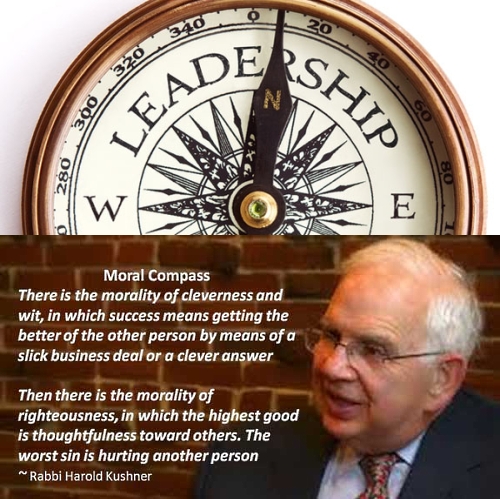
Sure, there are sociological explanations for America’s moral compass
swinging south, like having had a Commander in Chief who claimed that oral
sex in the Oval Office was not the same as having extramarital sex… but does
that really mean that we in the military should align our morals and value
system with his despicable, self serving ones? Just because someone jumps off of a bridge,
does that mean we should too? We are military Officers. We set our
own moral compass, we don’t follow the compass that civilians
carry. George Washington taught us to be above the fray and live a life of
honor and integrity when he started the organization we became Officers &
Gentlemen of. He set the example for what an American Officer is. Why are we
allowing today’s military leaders to tarnish that image with the kind of
unprofessional, tawdry, haphazard performance of duty we see occurring
daily?
As an ex-Army Officer of the Vietnam War I offer the view that the lack of
leadership on the part of our top brass today is discrediting the work we
did when we served… and all of those who came before us… and all of those
who followed. We, the ones who served honorably by going to war rather than
Canada, who accepted with a smile the taunts and laughs of derision many in
our own country threw at us, are seeing the three fundamental values we
value most... those that define what being an Army Officer is all about...
being sullied: morality, integrity and principles.
This is a leadership problem, and someone needs to get on it. As a junior
Lieutenant I learned quite early that when a problem arose I needed to act
on it… not wait to be directed, and certainly not wait until someone with a
higher rank than mine took the problem from me to solve themselves… because
of my own lack of action.
I also learned that it was my duty to anticipate problems and act to prevent
them before they occurred. Why then does it take Congressional hearings and
threats from our civilian government to step in and fix the problem of
sexual abuse in the military before the service Chiefs act? What in the hell
is going on when those senior Officers who command our military lack even
the basic leadership skills of a First Lieutenant of the Vietnam era? Do
these clowns not understand that it is their responsibility to maintain the
integrity of the military, provide moral leadership for its members, protect
the safety of the troops they command, maintain a combat effective
organization, and win the wars they fight? Do they not understand that it is
LEADERSHIP… writ large… that does this... not hiding their head in the sand,
ignoring the travails of the weak in their units, protecting their fellow
Officers from attack, or kowtowing to administrative leaders in Washington
just to keep their job, rank and privileges?
A fish rots from the head down, and that presents a problem for the Army
today. The problem is this: the kind of leadership sitting at the top of the
Joint Chiefs is not doing the military, and the Army in particular, any
favors. It is not setting the example that needs to be set. It is not
leading. It is reacting.
The problem this presents is that if the young Officer corps America is
grooming daily is not separated from this scene soon, and/or the privileged
few at the top causing this failure of leadership replaced, then this style
of military governance will infect the future leaders of America’s Officer
corps… to the point that the Generals we find ourselves with 15 years from
now will be no better than the ones we have today.
Why might this happen? Because even though America’s young Officer corps was
busy fighting for the past dozen or so years and not able to pay attention
to what was going on at the top of their ranks, or in the country they left
behind, they are now back from the wars. They are sitting around watching
what is happening here in America on a daily basis. They are forming
opinions about the America they fought for, as well as the Generals whose orders they followed.
Our guess is that the opinions they are forming are not so good.
These young Officers are the cream of America’s crop. More to the point,
they are America’s only crop. No other element of our society is
producing as many finely educated, morally righteous, integrity conscious,
socially responsible, principled, outstanding leaders as the U.S. military
is. These young men and women need to be valued and preserved as a national
asset, and funneled into those thousands of jobs that America needs done and
that only such leaders can do.
In this time of a shrinking military budget, confused postwar missions for
the military, lack of leadership from every element at the top from the
White House to Congress and the Joint Chiefs, if something is not done to
create a new mission for these Officers they will go the way of the
thousands of superb young Officers that left the Army as the Vietnam War
wound down. Yes, there were many excellent officers that stayed in after
Vietnam, but there were many, many more who left, discouraged that the Army
offered them no future.
And for those who say that there are plenty of good jobs in America to absorb these
people, that is not
the point. The point is that the shortcomings of today’s top level military
leadership suggests that we had better pay attention to the career path we
make available to the junior Officers coming home from Afghanistan if we
don’t want to find ourselves in 15 years in the same kettle of soup that we
are in today.
Putting aside the impetus that the disenchantment caused by some of those at
the top of our military today bring to this topic, the question is what can
be done for America’s young Officer corps to preserve their presence in the
military and keep them involved in serving the country?
The answer lies in building a post-war career path for them that makes sense
while at the same time a) helps to move America forward in the world and b)
accomplishes America’s post-war military objectives. If we simply learn the
lesson from Vietnam when the post-war RIF (Reduction In Force) made the
point to all of us young First Lieutenants and Captains that we were no
longer wanted and that there was no longer any room for us in the military,
we will be better off.
How can we do that? By creating missions these young leaders can take on,
missions that serve America's needs while at the same time they create a
career path that is as fulfilling as leadership in combat is... essentially,
missions that work to achieve the same goals as combat does but do not
involve combat.
To understand how to do this it is useful to pause and
recognize that the future of America’s Officer corps depends on keeping the
best and brightest of those returning from war today. These are the men and
women who will replace the people who, in turn, will replace Dempsey, Winnefeld, Odierno and the others who sit at the top today. Whether the
coming crop that replaces today’s Joint Chiefs is able to live up to the
level of the George C. Marshalls, William D. Leahys and Hap Arnolds of the
past, we don’t know. But we are willing to bet that among today’s young
Lieutenants and Captains, the ones that will replace the crop that is next
in line, there are many who do. We believe this because the young Officers
roaming the fields of Afghanistan today learned their leadership by entering
the service knowing, not expecting, that they would serve in
combat. Unlike many of us Vietnam Vets, men who thought we would likely see
combat (although few actually saw real combat), today’s young
Officers knew the day they took their oath that their career would begin
with combat.[1]
This suggests that within their character is an element that sought service
in the favor of their country… service not in the form of lip service as is
the case with many politicians, but service able to be measured in a very
real, visceral, meaningful way… service given by the side of their troops,
in combat, as their leader. That makes these young men and women unique and
worth keeping within the embrace of our military. For these are exceptional
young men and women… the kind who willingly step forward to foster their
nation’s interests and security, and do so with honor, integrity,
principles… and dare we say, with morality too.
We need to keep these people on the team, and to do
that we must offer them a career path second to none. Bearing in mind that
these leaders possess unique in-service capabilities born out of fighting on
the nation’s most critical fronts in wars that not everyone agreed with, one
can see that any career offered to them as America’s foreign wars wind down
must be unique. Because they learned their craft by solving intractable
problems and leading men in the process, what is offered to them as a career
from this point forward must match this level of challenge, or they will
tire of the job and return to civilian life. Keeping their men’s barracks
STRAC and their Bradley’s humming is not going to be enough. Motor pool duty
gets old quickly for a former combat Officer. So too does duty centered
around reducing alcohol incidents on base or a constant emphasis on physical
fitness and training.[2]
What is the challenge these kinds of leaders seek? Answer: a mission of
worth and importance, the chance to make soldiers out of undisciplined
idlers, a mission that presents challenges beyond their current capability
but within their grasp with hard work, intelligence and dedication, and a
duty that gives them freedom to maneuver within the broad intent of the
mission.
After the Vietnam War these kinds of missions were simply not available to
the young Officers that returned home, and so the Army went into atrophy. At
first the slackers left, then those that truly enjoyed the military but
whose skills fell short of the butt-kissing needed to advance. These were
followed by the career types whose hopes were dashed when others with less
skills advanced but they did not. Eventually some of the best left too… in
fact, many of them did. If one accepts what Stanley Allen McChrystal said in
his book My Share of the Task: A Memoir, nearly all of the Officers
that came out of Vietnam were flawed. But we know that is not the case; and
besides, McChrystal exhibits enough flaws of his own that he should not be
pointing fingers. The point is this: in a post-war Army good missions are
needed to keep good men.
So what kind of missions should the Army be developing to retain the
Officers it has paid so dearly to train? Part of the answer comes from
simply looking at what these men did during their time in service. The rest
of the answer comes from looking at what America needs in a peacetime
military.
For the most part, these men excelled in the work they did while deployed in
international environs, combat or otherwise. Iraq and Afghanistan are the
obvious two that come to mind, but so aren’t places like Kyrgyzstan, Turkey,
Qatar, Kuwait, Bahrain, Spain, the Southern Philippines, numerous hell holes
in the middle east, and Africa too. And these are just a few of the 150
countries where America has troops.
Of importance, their work in these places didn’t focus on keeping broken
equipment working, as it will now that the wars are winding down; nor did it
involve endless change of command ceremonies held for the purpose of
polishing someone’s brass or dusting off their scrambled eggs. It involved
being responsible for millions of dollars in equipment, the lives of their
men in a very real and dangerous environment, working with thousands of
foreign national security forces, training people in languages not their
own, and trying to turn the “locals” to their side. In simple English, their
work was not garrison work, it was work in foreign countries, in the field,
with foreign partners, that focused on making the world better. It was the
military version of the Peace Corps. Offering today’s young Officers
anything less than a chance to continue to do this kind of work in the new
post-war Army is sure to make them yawn. If they yawn, they will move on.
Between February and July 2012, we ran a series of articles on this website
that discussed how the U.S. should expand its military relations with many
of the countries that have the ability to impact what happens in the
hotspots of Asia… places like the Senkaku Islands, the Korean Peninsula, the
choke points of the Malacca Straits, the land route through Myanmar, the
land bridge through Bangladesh to India, and more. We proposed that in order
to stem the trend towards military confrontation in these regions the Army
should establish a set of programs where U.S. units are partnered with their
equivalent foreign partner units, in the foreign partner's country, for
lengthy peacetime tours of duty. The goal proposed was to build closer
military-to-military ties with the countries that inhabit this part of the
world, including, in addition to the usual trinity of South Korea, Japan and
the Philippines, the countries of Myanmar, Bangladesh, Cambodia, Vietnam,
Indonesia, Brunei, East Timor, and Laos.
Here we are suggesting that this proposed program be expanded to include a
focus on repurposing the young Officers America's military needs to keep
within its fold, by assigning them the bulk of the duty these missions hold.
We suggest that these young Officers, and the Companies and Battalions they
command, should be deployed for combat length tours on non-combat missions,
to these and many other peaceful countries, to work in unison with units of
equivalent size in each country to transfer, via joint exercises, America’s
values.
We believe that whether these young Officers and the units they command work
to help train their “brother” military to be more disciplined or simply
learn modern military management techniques... or work to build roads,
schools and common understanding... sending America's young idealist Officers
to work beside fellow military officers in cultures and with languages that
prove a challenge will not only help bring stability to the world but build
respect between the nations involved. To make sure that amity is built
between the Officers and units involved, we suggest that in addition to
deploying U.S. units to second and third world foreign countries for combat
length tours, the foreign units these young Officers work with be brought to
America too, for similar tours of duty, during which time they will be
posted alongside the same unit that had spent time in their country… thus
building long term unit-to-unit ties as well as officer-to-officer ties.
Looking today at the need to offer career opportunities to America’s young
and brightest Officers, opportunities that will help them continue to work
on advancing America’s world interests in ways that parallel what they have
done to date on combat tours of duty, this approach seems like a logical
solution to the challenge of keeping these men in the fold. Putting in place
a program to offer the peacetime version of a combat tour will help retain
many of them.
The simple fact is, there are still many allied nations that are facing and
fighting their own internal terrorists. If one adds to this the dozens of
nations that, while not America’s true allies, are at least predisposed to
liking America’s culture and values, one can come up with a world full of
nations that would be happy to set up programs that build long term
relations between their own field sized military units and those of the U.S.
Army; relations where the two units involved are expected to build a 10 - 15
year joint operational partnership, if not one that lasts longer.
The kinds of military units this sort of program would work best with are
Battalion sized units and below. In many cases these sorts of units are
already fighting local terrorists, while at the same time trying to
establish national security and build a professional military. America can
help the smaller countries of the world get this job done, and America’s
Lieutenants, Captains, Majors and light Colonels are perfect for the task.
Knowledgeable readers will be quick to point out that America has been
running missions of this type for a long time now… with countries like
Thailand, India, Israel, Saudi Arabia, and a few more. That is true. But so
is it true that the scale of the exchanges that have taken place have
neither been large nor involved the same unit and people for any worthwhile
length of time. At most a handful of Officers are involved, and these men
stay for no more than a week or so. For them it’s more in the order of a
working vacation than fulfillment of a career goal. If any of America’s
values are passed on to the host country, it is usually only through
observation that the American’s behaved, didn’t get too drunk, and left the
local girls alone. We are looking for more than this.
We are looking to let a field commander… on a scale as small as a platoon
leader… take his men to a foreign country for months if not years of
interexchange work. Their objective will be to get to know the partner
military unit/team, to learn of their problems, and to help them solve those
problems. Along with this they will carry the duty of working to help build
the local economy, improve the quality of the indigenous forces in all
aspects from discipline to education, skills, and societal values, provide
humanitarian assistance, and build personal bonds that are meant to last a
lifetime.
Via the deployment to foreign countries of units up to and including
Battalion size, to partner with similar sized units in these countries, for
yearlong tours of duty that return the favor by taking the foreign unit with
them back to America for a similar length tour of duty in our country… where
the joint teambuilding work continues until the whole exercise is repeated
again, one can give real meaning to the task of working during peacetime to
avoid future wars… while at the same time using to its best ability the
unique skills America’s young Officer corps has developed since the first
Gulf War started in 1991.
American cities have sister cities in foreign countries. States have sister
states. Why can’t the 518th Signal Company have a sister unit in Mandalay
(population 1.2 million) or in
Myitkyina in the Kachin
State, where ethnic cleansing is causing unrest and the Myanmar military is
trying to put a stop to it but is unable to keep up with fast moving events
due to a poor rural communication infrastructure? Adding to the value of a
U.S. – Myanmar military partnership is the fact that Myanmar sits atop a
strategic junction that ties together access to China's underbelly, as well
as control over the Andaman Sea and Bay of Bengal, both gateways to India.
Similarly, why can’t the 249th
Engineering Battalion send one or two of its companies to partner with a
unit in Zimbabwe, where conflicts have caused massive power interruptions?
And if the conflict needs stifling, why can’t the 289th Military Police
Company partner with the local military or even civilian police to help them
learn how to create civilian harmony?
Missions of this type would give our already excellently trained young
Officer corps reinforced exposure to foreign cultures and international
environments, contribute to both the host country’s and America’s national
security, and provide a career path more in line with what a military
Officer is best suited for and will seek during peacetime. What it will also
do is prove the point that in addition to being the greatest war-fighting
military on earth, the U.S. military is also the best peacekeeping asset
America has.
At this time in our history, just as at the end of WWII, the Korean and
Vietnam wars, America has at its disposal the world’s most intelligent,
self-motivated, culturally aware, proactive, dedicated, and principled cadre
of young Officers it has ever possessed. Let us not lose them as we did
those who moved on at the end of our prior wars.
Footnotes:
[1] It is not our intent here to disparage those not
involved in actual combat. We were all part of the same team and combat by
itself is no measure of the effort or sacrifice of any man or woman who
served in Vietnam. Life in the Army was intensely demanding both physically
and emotionally, and fortunately actual combat, i.e. being involved in
fighting with the enemy, was relatively rare. As a general rule only a
relatively small percentage of Vietnam Vets were ever involved in combat.
The numbers are unproven, but most estimate that less than 30% of all who
served ever saw combat of any sort during their war. Part of the reason is
that the ratio of combat to support troops varied over time. At most times
there were approximately 10 troops supporting every soldier carrying a rifle
in the field. At the height of the war in 1969, there were roughly 540,000
troops in Vietnam. Of that total, only about 60,000 were-rifle carrying,
front-line soldiers. At any given point, perhaps less than 40,000 of that
60,000 were actually in the field, at risk and seeking contact with the
enemy. Additionally, minor wounds, disease, R&R, leaves, training,
administrative needs, rear assignments and legal proceedings kept about 25%
of an infantry company out of the line, on a continual basis. An example of
the impact this has on the statistics as to how many men saw combat in
Vietnam, Long Binh, America’s largest facility in Vietnam, was staffed by
over 100,000 US troops (that is roughly 20% of the entire US troop
commitment at the height of the war). Of these only about 5-10% were
assigned to a direct combat role. – To return to your place in the text, CLICK HERE
[2] STRAC: Strategic, Tough, and Ready Around the
Clock. – To return to your place in the text,
CLICK HERE
Like this article? Let us know by
helping us with our scholarship fund efforts. A $30.00 donation
to our
Scholarship Fund
will help us get one step closer to helping another deserving High School
graduate attend college. Your donation is tax deductible and your
kindness will go father than you think in making
it possible for another young American to fulfill their dream of a college
education. Thank You!
COMMENT SECTION
Have a thought on this article? Let us know what it is.
Use your real name or make up a User Name. If you make up a User Name, use
the same one each time you comment on our website, so that our readers will
get to know your views on the world. Don't want to be known? Paranoid? Then
make up a new name each time you comment.
eMail addresses are optional. If you provide one we will add you to our
Scholarship Program mailing list and keep you informed of upcoming
events. What we will not do however... ever, ever, ever... is sell or give
your eMail address to anyone... unless of course the NSA asks for it.
Original Site Design and Construction
By John Hart, Class 07-66. Ongoing site design and maintenance
courtesy Class 09-67.
Content and design Copyright
1998 - 2013 by ArmySignalOCS.com.







 And lest you say that this is little more than a matter of boys and girls
behaving badly, or that’s what you get when you place women next to men in
combat areas, it’s not. It’s a sign of poor leadership. From the top down.
The fact is that whether you agree with women (or gays) in the military or
not does not justify sexually assaulting them. If it were your son or
daughter that was assaulted, you would be outraged. Why are we any less so
with our neighbor’s child?
And lest you say that this is little more than a matter of boys and girls
behaving badly, or that’s what you get when you place women next to men in
combat areas, it’s not. It’s a sign of poor leadership. From the top down.
The fact is that whether you agree with women (or gays) in the military or
not does not justify sexually assaulting them. If it were your son or
daughter that was assaulted, you would be outraged. Why are we any less so
with our neighbor’s child? 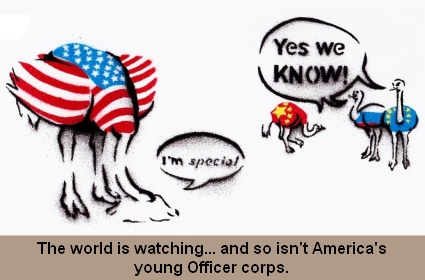 Why might this happen? Because even though America’s young Officer corps was
busy fighting for the past dozen or so years and not able to pay attention
to what was going on at the top of their ranks, or in the country they left
behind, they are now back from the wars. They are sitting around watching
what is happening here in America on a daily basis. They are forming
opinions about the America they fought for, as well as the Generals whose orders they followed.
Our guess is that the opinions they are forming are not so good.
Why might this happen? Because even though America’s young Officer corps was
busy fighting for the past dozen or so years and not able to pay attention
to what was going on at the top of their ranks, or in the country they left
behind, they are now back from the wars. They are sitting around watching
what is happening here in America on a daily basis. They are forming
opinions about the America they fought for, as well as the Generals whose orders they followed.
Our guess is that the opinions they are forming are not so good.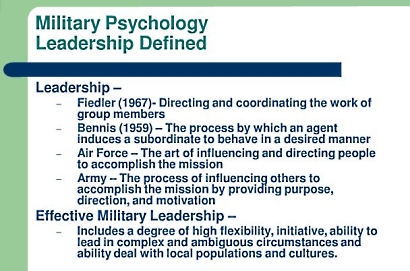 This suggests that within their character is an element that sought service
in the favor of their country… service not in the form of lip service as is
the case with many politicians, but service able to be measured in a very
real, visceral, meaningful way… service given by the side of their troops,
in combat, as their leader. That makes these young men and women unique and
worth keeping within the embrace of our military. For these are exceptional
young men and women… the kind who willingly step forward to foster their
nation’s interests and security, and do so with honor, integrity,
principles… and dare we say, with morality too.
This suggests that within their character is an element that sought service
in the favor of their country… service not in the form of lip service as is
the case with many politicians, but service able to be measured in a very
real, visceral, meaningful way… service given by the side of their troops,
in combat, as their leader. That makes these young men and women unique and
worth keeping within the embrace of our military. For these are exceptional
young men and women… the kind who willingly step forward to foster their
nation’s interests and security, and do so with honor, integrity,
principles… and dare we say, with morality too. 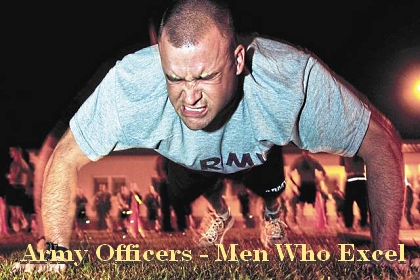 Of importance, their work in these places didn’t focus on keeping broken
equipment working, as it will now that the wars are winding down; nor did it
involve endless change of command ceremonies held for the purpose of
polishing someone’s brass or dusting off their scrambled eggs. It involved
being responsible for millions of dollars in equipment, the lives of their
men in a very real and dangerous environment, working with thousands of
foreign national security forces, training people in languages not their
own, and trying to turn the “locals” to their side. In simple English, their
work was not garrison work, it was work in foreign countries, in the field,
with foreign partners, that focused on making the world better. It was the
military version of the Peace Corps. Offering today’s young Officers
anything less than a chance to continue to do this kind of work in the new
post-war Army is sure to make them yawn. If they yawn, they will move on.
Of importance, their work in these places didn’t focus on keeping broken
equipment working, as it will now that the wars are winding down; nor did it
involve endless change of command ceremonies held for the purpose of
polishing someone’s brass or dusting off their scrambled eggs. It involved
being responsible for millions of dollars in equipment, the lives of their
men in a very real and dangerous environment, working with thousands of
foreign national security forces, training people in languages not their
own, and trying to turn the “locals” to their side. In simple English, their
work was not garrison work, it was work in foreign countries, in the field,
with foreign partners, that focused on making the world better. It was the
military version of the Peace Corps. Offering today’s young Officers
anything less than a chance to continue to do this kind of work in the new
post-war Army is sure to make them yawn. If they yawn, they will move on. 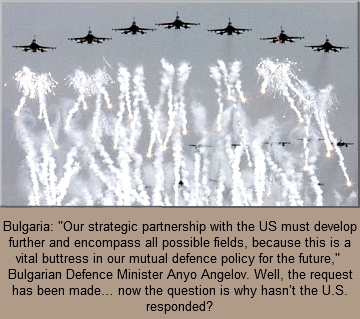 We believe that whether these young Officers and the units they command work
to help train their “brother” military to be more disciplined or simply
learn modern military management techniques... or work to build roads,
schools and common understanding... sending America's young idealist Officers
to work beside fellow military officers in cultures and with languages that
prove a challenge will not only help bring stability to the world but build
respect between the nations involved. To make sure that amity is built
between the Officers and units involved, we suggest that in addition to
deploying U.S. units to second and third world foreign countries for combat
length tours, the foreign units these young Officers work with be brought to
America too, for similar tours of duty, during which time they will be
posted alongside the same unit that had spent time in their country… thus
building long term unit-to-unit ties as well as officer-to-officer ties.
We believe that whether these young Officers and the units they command work
to help train their “brother” military to be more disciplined or simply
learn modern military management techniques... or work to build roads,
schools and common understanding... sending America's young idealist Officers
to work beside fellow military officers in cultures and with languages that
prove a challenge will not only help bring stability to the world but build
respect between the nations involved. To make sure that amity is built
between the Officers and units involved, we suggest that in addition to
deploying U.S. units to second and third world foreign countries for combat
length tours, the foreign units these young Officers work with be brought to
America too, for similar tours of duty, during which time they will be
posted alongside the same unit that had spent time in their country… thus
building long term unit-to-unit ties as well as officer-to-officer ties. 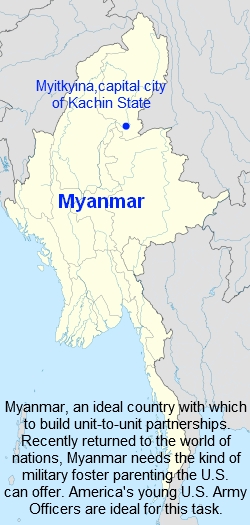 Via the deployment to foreign countries of units up to and including
Battalion size, to partner with similar sized units in these countries, for
yearlong tours of duty that return the favor by taking the foreign unit with
them back to America for a similar length tour of duty in our country… where
the joint teambuilding work continues until the whole exercise is repeated
again, one can give real meaning to the task of working during peacetime to
avoid future wars… while at the same time using to its best ability the
unique skills America’s young Officer corps has developed since the first
Gulf War started in 1991.
Via the deployment to foreign countries of units up to and including
Battalion size, to partner with similar sized units in these countries, for
yearlong tours of duty that return the favor by taking the foreign unit with
them back to America for a similar length tour of duty in our country… where
the joint teambuilding work continues until the whole exercise is repeated
again, one can give real meaning to the task of working during peacetime to
avoid future wars… while at the same time using to its best ability the
unique skills America’s young Officer corps has developed since the first
Gulf War started in 1991.