Play our music game. See if you can find the hidden
Army marches on our site. Click the icons you find on each page. Some have music
hidden
behind them, others do not. Good luck!
Music courtesy USAREUR Band
To follow us on Twitter, click here!
Click below to LIKE us!
Click below to check out our Facebook page.
Make a difference!
It’s easy to give!
As a non-profit organization
donations to our Scholarship Fund are 100% tax-deductible.
More importantly, your donation helps children of
Signal OCS families achieve their dream of a college education.
Contributions in any amount are welcome.
Just click on the
DONATE button above to make a donation today.
Thank You!
From Our Home Page Archive:
Home Page as originally published in
August 2013
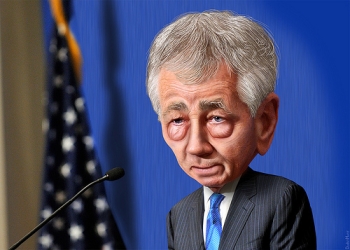
— This Month — Secretary Hagel's battle with the budget.
The NSA's assault on our civil rights.
What the coming RIF means for the future of our
young Officer corps.
and...
Part 2: America Between The Wars –
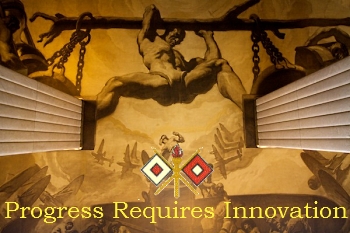
Progress Requires Innovation
- - - - -
MISSION STATEMENT
Our Association is a
not-for-profit fraternal organization. It's purpose is a) to foster
camaraderie among the graduates of Signal Corps Officer Candidate
School classes of the World War II, Korean War, and Vietnam War
eras, b) to organize and offer scholarships and other assistance for
the families of Officer and Enlisted OCS cadre who are in need, and
c) to archive for posterity the stories and history of all of the
Signal Corps OCS Officers who served this great country. We are open
to ALL former Army Signal Corps OCS graduates,
their families and
friends, as well as other officers, enlisted men, those interested
in military history, and the general public.
Please, come join us. For more information about our Association, to
see a list of our Officers and Directors, or for contact details,
click on the OCS Association link at left.
Please note: The
views and opinions expressed on this website are offered in order to
stimulate interest in those who visit it. They are solely the views
and expressions of the authors and/or contributors to this website
and do not necessarily represent the views of the Army Signal Corps
Officer Candidate School Association, its Officers, Directors,
members, volunteers, staff, or any other party associated with the
Association.
If you have any suggestions for improvements to this site, please
send them to
WebMaster@ArmySignalOCS.com. We are here to serve you.
Last month we began this series of
articles by looking at how the Signal Corps took charge of
preparing the U.S. military for WWII. What we saw was that
while no one assigned the Signal Corps this duty, there was
no one else stepping forward to take responsibility for it
either. Knowing that nature abhors a vacuum, as all good
Signal Corps engineers do, the Generals that ran the Signal
Corps between WWI and WWII simply stepped forward and filled
the vacuum that was being created by others.
And so it was, while most everyone in all of the other
services and branches were celebrating the successful outcome of WWI, the
Signal Corps was going about preparing for the next great war, even though
the world at large thought that the lessons of WWI made it such that there
would never be another world war ever again.
Among
the things the Signal Corps did between the wars was build an infrastructure
for the research and development of newer and better forms for control of
the battle space. They did this not only in the area of communications, but
also in those areas that were allied with the process of communicating. And
so when WWII rolled around the U.S. military found itself not just with
better ground to air spotlights with which to spot incoming bombers, but
also better means to track those bombers, predict their path, aim
anti-aircraft guns at them, and communicate these intentions and more
throughout the battle space. Incredibly, almost all of this, for not just
antiaircraft guns, but everything else from better bomb sights to the design
of combat aircraft and much more, was driven by the Signal Corps.
The Signal Corps’ role in helping bring better command
and control to this and other areas was wide-ranging. It extended from
initiating and overseeing the research required to develop more effective
equipment and arms right down to rewriting the battle field strategies,
tactics, and procedures that needed to be followed to make the new equipment
and arms being brought to the field more effective.
As we discussed last month in the first part of this
series of articles, the foundation of this effort was the creation of a
research and development operation at Ft. Monmouth, as well as some 17 other
laboratories around America. Yet while this was the foundation of the
effort, it was not where it stopped.
The Signal Corps’ efforts between WWI and WWII also
included spurring the establishment of the MIL-SPEC system, the building of
theoretical research liaisons with major American universities, partnerships
for military product production with America’s best manufacturers, the
creation and management of logistics system able to deliver the new
equipment being produced to the field where it was needed, and most
importantly the establishment of a military-wide education and training
system to assure that the troops who received the new equipment being
delivered knew how to use the toys they were being given. In simple fashion,
the Signal Corps led the effort to take the remnants of the American
military system at the end of WWI and turn it into a 20th century fighting
machine. As important, so thorough was the Signal Corps’ efforts back then
that it crossed service lines, extending itself throughout the Army, into
the Navy, and of course was the driving force behind the creation of the Air Force itself.
To gain a sense of how the Signal Corps did its magic,
we will look this month at how it went about improving the capabilities of
one of the elements that led to a successful war fighting effort in WWII.
And just to make our point, rather than pick something revolutionary for the
time, like the development of better means for air to ground communication
and bombsite targeting, we will look instead at how the Signal Corps brought
improvements to the mundane, unglamorous element called “wire.” For without
wire based communications the left hand in the U.S. military between the
wars, and certainly throughout WWII, would not have known what the right
hand was doing.
Wire: The Most Simple Way To Get The Message Through
To those who used the communications equipment,
whether it was of wire or wireless design mattered less than whether it got
the message through. Generally speaking, wireless was something new,
hovering at the edge of the wire based communication world. Back in the
1930s everyone knew of it, but it was most certainly not available
throughout the military, and definitely not in the field—that is, the battle
space the common soldier inhabited in 1939.
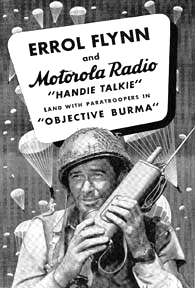
The unfortunate fact was that the true capabilities of
wireless communication lay in the future… at least 12 or more years down the
road when the “front-line handietalkie” would be introduced.
This page last updated 1 August 2013.
New content is constantly being added. Please check back
frequently.
Posted 1 August 2013
–Thinking about a second home? Maybe a cottage
somewhere? Perhaps
something up in the mountains so that you can do a little
hunting or fishing? Colorado, maybe? Or how about a place
along the coast... the beautiful Tidewater area of South Carolina,
say? Then check out our list of Signal OCS members that run
their own real estate companies. They'll be sure to treat
you right. Talk to
David Martinek, Class 09-67, or
Jimmy Stewart, Class 17-52. They'll both help you
find what you need. You can find them on our
Other Links
page, or just click their names above.
Posted 1 August 2013
– Have a business of
your own? Drop us a note with the details and we'll post your business on
our Other Links page. And don't forget, you can advertise your business in
our OCS Newsletter. Just send an eMail to Preas Street at
preasstr@csranet.com for details.
Posted 1 August 2013
–The
Office of Strategic Services (OSS) Society
has extended a special invitation to all former Army Signal Corps
OCS graduates and Officers to join them
for the presentation of the William J. Donovan Award to
Admiral William H. McRaven USN, Commander, U.S. Special Operations
Command (USSOCOM), in Washington, DC, on October 26, 2013.
In addition to honoring Admiral McRaven, the Society will
also honor veterans of OSS and members of its successor
organizations: the Central Intelligence Agency and USSOCOM.
A special musical tribute to Hollywood legend Marlene
Dietrich will also be presented. Ms. Dietrich served the OSS
by recording songs that were used by its Morale Operations
Branch. Maria Riva, Marlene Dietrich's daughter, will offer
a toast to her mother.
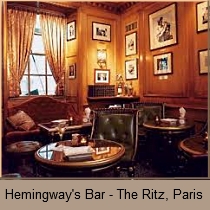
At the dinner the Society will also commemorate the
liberation of the Hotel Ritz in Paris in 1944 by Ernest
Hemingway, Col. David Bruce, and members of the French
Resistance. When they arrived at the Hotel Ritz shortly
after the Nazis had fled the hotel, the manager asked
Hemingway if there was anything he could do for them.
Hemingway said: "How about 75 dry martinis?" Colin Field,
the head bartender at the Hotel Ritz and founder of its
legendary Hemingway Bar, will offer a toast to Ambassador
Bruce, Hemingway, and his son, John Hemingway, who served as
an OSS Jedburgh (the predecessors to U.S. Army Special
Forces) and parachuted behind Nazi lines into France.
(Marlene Dietrich and Ernest Hemingway met while crossing
the Atlantic in 1934 and remained close friends until the
author's death in 1961.) Seating space is limited; those interested in attending this
special function should contact the OSS directly at: The OSS
Society, Inc., 703-356-6667
oss@osssociety.org .
Posted 1 July 2013
–Details for the 2013 Army Signal
Corps OCS Reunion are available. Click on the
Reunion Info link above left
to read them. It's being held in Augusta, Georgia. Sign up now and be sure to join us there!
Posted 1 June 2013
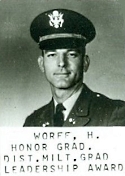
–New class picture for Class
01-67, courtesy of Herb Worff, has been posted. Be sure to
check it out on the 01-67 Class Page. Thanks
Herb, it's sure strange to see how young we all looked back
then, including you!
Continued from left column...
Until then communication needed to be provided by wire…
connected as it were at several wire points across a battle
space.
Before WWII, in the time period of 1939 and thereabouts, it
was clear that wire was the main method by which
communication was made possible. It was dominant for both
tactical and administrative use. Without it not only a field
combat unit but its entire higher echelon command structure
would have no idea what was going on. Its strength was that
it lent itself to secrecy, versus the radios of the time
that let everyone know what was being broadcast. But its
limitations included being difficult to install and protect
against enemy sabotage or “tapping.” Either way, wire as a
means of establishing battlefield communications proved
beneficial in more ways than one: it had been around for a
long time, and its advantages and detriments were well known
to all.
Yet among its supporters all knew that while wire provided a
basis for the establishment of a communication network that
worked and was effective, there was much that could be done
to make it better. In terms of making it better, the period
between the wars provided all the time that was needed to
experiment with new forms of wire based communication and
bring them to the field. And the Signal Corps did just that.
Without Leadership
Anarchy Rules
Some say that America is in trouble because it has no
leader. They say that without leadership there is no one to
ensure that the laws that have been written are being
followed and society is functioning as efficiently as
possible. They say that as America slips in prominence on
the world stage and no one does anything about it, the
country is on the verge of anarchy. In society, anarchy is
defined as a country having “an ineffective or no
government.”
We would posit that America is not suffering from anarchy,
it is in fact suffering from just the opposite. It has
too much government. We would submit that the last 10
years of politics as usual, $13 trillion in debt, 9.6%
unemployment, 0.9% annual growth in the economy, and cities
filled with poverty and crime shows clearly that when a
government gets as large as ours it is impossible for it be
effectively led. That is, we are suggesting that when a
country gets as big as America is, in terms of population,
power, resources, political strength, and global clout, it
may be impossible for it to be led effectively by one man...
unless that man is a dictator.
But what of our beloved military? In terms of quality,
capability, power, global reach, and effectiveness it too is
the largest in the world. Is it too big to lead? Are recent
trends pointing towards anarchy in the military too?
Probably not, but be wary… the military is heading for a
crises if its approach towards leadership doesn’t change
soon.
To begin, it is disheartening to see the sharp increase in
sexual assaults going on in the military. This is a failure
of leadership and nothing more. More incredible, this
onslaught of disgusting, undisciplined behavior seems to be
happening from the lowest level EM up through the top brass.
Whether its Petraeus going AWOL from his marriage to dally
with a writer, the crazies at Abu Ghraib running around
operating their own sexual Kabuki theater, or the officer
heading a unit of the Air Force’s sexual assault prevention
office being arrested and charged with sexual battery, the
lack of leadership in the military that is allowing this to
take place is mind blowing.
The NSA Takes On Your Civil Rights
As a young electronics engineering graduate who was offered
a job with the NSA back in 1965, decided to take a different
job at Brookhaven National Labs with the then U.S. Atomic
Energy Commission, and ended up in Vietnam 11 months later
as a Signal Corps Officer, it pains this author to see the
discussion going on about the NSA’s metadata collection
program. “What in the world is going on with my country?” I have
been asking myself.
Or, at least, that is what I was wondering until I happened
to catch the House
Judiciary Committee hearings (NSA Data Collection and
Surveillance Oversight Hearings) on C-Span 2 this past 19 July 2013. Watching them was more
than enlightening, it was gratifying.
In those hearings the NSA (and others) were grilled by a
series of representatives who deconstructed the entire NSA
program, right before the cameras. The answers and
explanations to their questions were provided by NSA
representatives who were not only lucid, but they helped
greatly in causing this communications engineer and former
Signal Corps Officer to understand not only how the NSA’s system works,
but why it is needed.
That’s not to say that the issue of the NSA capturing
aggregated metadata on hundreds of millions of Americans,
including every member of Congress and every citizen in
America that has a phone, is not troubling… it is. But what
is just as important to what appears to be a violation of
the U.S. Constitution’s protection of our civil liberties is
the fact that the system the NSA set up works… it catches
terrorists.
James Cole, Deputy Attorney General—a well spoken,
professional bureaucrat who seemed to truly approach his job
with a sense of integrity, honesty, and good intent—was
often tasked with fielding the tough questions the
Representatives asked. He did a marvelous job. He clearly
knew the subject of which he spoke, not just from the
perspective of the legal aspects of the issue (which he was
principally concerned with), but also the value of the
metadata vacuuming program itself.
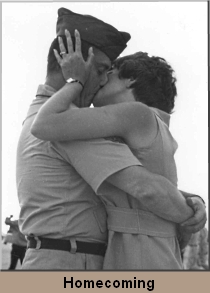
Will We Be Young Men Again?
Will we wake from this dream to find ourselves alive, on a
flight home from a far off land where we valiantly fought a
war that many say served no purpose? Will we wake to find
ourselves looking for a loved one waiting for us at an
airport? A world that passed us by while we were away?
Former friends with solid, good paying jobs, who lament, as
we're finally released from the Army, our late start on a career?
Is this a dream, or a memory? Did we live those days, or do
we still?
The enemy creeps through the wire at night, but this time
the enemy is time. Time does funny things to the mind.
Time is the enemy. He is as stealthy as the enemy of old.
Yet you can’t kill this one.
He comes each night, taking away a piece of your memory. A
piece of your past. A piece of today. A piece of tomorrow.
And with each visit your world gets smaller… by a bit… not
much mind you… just a bit… but a bit nevertheless.
As you lay awake tonight watching for the enemy, be aware
that just as time has changed so many things in your life,
the enemy you seek has changed too.
Do not let this enemy defeat you. Beat him. While you still
live, LIVE. For that is what he wants to take from you... the
joy of life you still have.
Peace WithHonor?
It is incredible how acrimonious the
issue of the Vietnam War still is today.
"Peace with Honor" was a phrase
President Richard Milhous Nixon used in his speech on
January 23, 1973, to describe the signing of the
Paris Peace Accord that ended the Vietnam War.
When he used the phrase it wasn't his first time. He had
tried out a variation of it in a campaign promise he made earlier in
1968, when he said "I pledge to you that we shall have an
honorable end to the war in Vietnam."
We won’t opine on whether there was
any honor that accompanied how Nixon achieved his peace in
Vietnam. Not this time anyway, as judgments and comments
about the Vietnam War still bring bulging veins and purple
necks of rage to too many.
We will say however that rarely when
people have spoken of peace with honor has there been any
real honor involved. In 1775
Edmund
Burke explained why this is so when he opined that "The
superior power may offer peace with honor and with
safety....But the concessions of the weak are concessions of
fear." One might say that for the South Vietnamese
government, being left to their own devices by Kissinger’s
crafty negotiations made them clearly the weak party in
this case. The concessions they made to the North as America
turned its back on them were probably born of the fear Burke
spoke of.
But maybe the best use of the term
came from
Neville Chamberlain (British prime minister) in 1938
when upon returning from talks with Hitler he proudly
proclaimed "My good friends, for the second time in our
history, a British Prime Minister has returned from Germany
bringing peace with honour. I believe it is 'peace for our
time.' Go home and get a nice quiet sleep."
So much for good sleeps when
politicians begin talking about peace with honor.
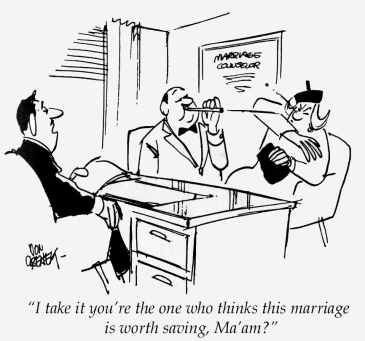
The above was the most popular cartoon of 1965
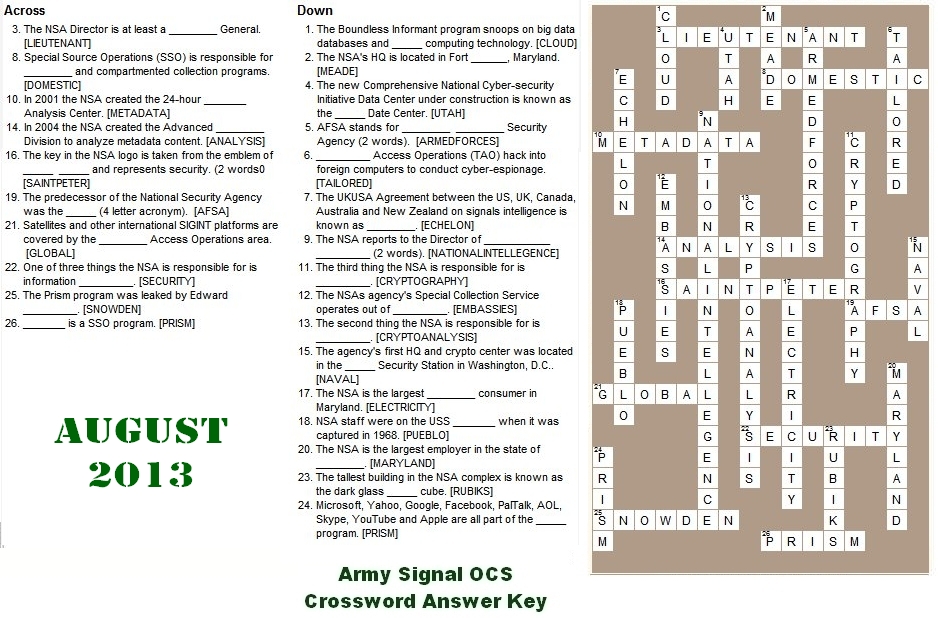
August's Crossword Puzzle
Theme:
The NSA
Hint:
Join 2 and 3 word answers together as one complete word.
For
answer key to this month's puzzle,
see icon at bottom of page
Search Instructions:
To perform a
quick search for a VIETNAM, KOREA or WWII era class (such
as: 7-66),
a graduate (such as: Green), or a site search, follow
this example:
A search, for example, for Richard
Green, will result in all the "Richard" entries,
all the "Green" entries, and all the "Richard Green"
entries.
Original Site Design and Construction
By John Hart, Class 07-66. Ongoing site design and
maintenance courtesy Class 09-67.
Content and design Copyright 1998 -
2013, ArmySignalOCS.com
This site is updated as we
receive new material. Please check back frequently. For your
security, please read our Website Privacy & Use Policy by
clickinghere.









 At the dinner the Society will also commemorate the
liberation of the Hotel Ritz in Paris in 1944 by Ernest
Hemingway, Col. David Bruce, and members of the French
Resistance. When they arrived at the Hotel Ritz shortly
after the Nazis had fled the hotel, the manager asked
Hemingway if there was anything he could do for them.
Hemingway said: "How about 75 dry martinis?" Colin Field,
the head bartender at the Hotel Ritz and founder of its
legendary Hemingway Bar, will offer a toast to Ambassador
Bruce, Hemingway, and his son, John Hemingway, who served as
an OSS Jedburgh (the predecessors to U.S. Army Special
Forces) and parachuted behind Nazi lines into France.
(Marlene Dietrich and Ernest Hemingway met while crossing
the Atlantic in 1934 and remained close friends until the
author's death in 1961.) Seating space is limited; those interested in attending this
special function should contact the OSS directly at: The OSS
Society, Inc., 703-356-6667
At the dinner the Society will also commemorate the
liberation of the Hotel Ritz in Paris in 1944 by Ernest
Hemingway, Col. David Bruce, and members of the French
Resistance. When they arrived at the Hotel Ritz shortly
after the Nazis had fled the hotel, the manager asked
Hemingway if there was anything he could do for them.
Hemingway said: "How about 75 dry martinis?" Colin Field,
the head bartender at the Hotel Ritz and founder of its
legendary Hemingway Bar, will offer a toast to Ambassador
Bruce, Hemingway, and his son, John Hemingway, who served as
an OSS Jedburgh (the predecessors to U.S. Army Special
Forces) and parachuted behind Nazi lines into France.
(Marlene Dietrich and Ernest Hemingway met while crossing
the Atlantic in 1934 and remained close friends until the
author's death in 1961.) Seating space is limited; those interested in attending this
special function should contact the OSS directly at: The OSS
Society, Inc., 703-356-6667


 Until then communication needed to be provided by wire…
connected as it were at several wire points across a battle
space.
Until then communication needed to be provided by wire…
connected as it were at several wire points across a battle
space. 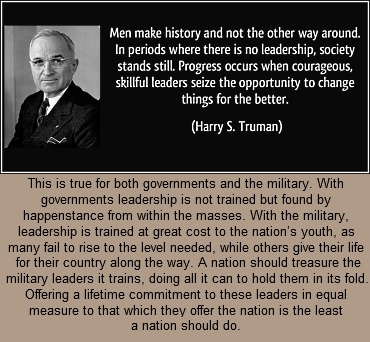

 Is this a dream, or a memory? Did we live those days, or do
we still?
Is this a dream, or a memory? Did we live those days, or do
we still?