|

Where Are The Americans When You
Need Them!
Go home... no, never mind, come back...
no, forget that, go home... on second thought...
Our poor Philippine friends seem to
be caught between a rock and a hard place. Most former
Signal Officers traveled through the Philippines at one time
or another while serving overseas, usually enjoying every
minute of their stay. Those who
 were posted to the
Philippines, back during the time when Subic and Clark were
operational and both Army, Navy and Air Force bases
abounded, laud the experience as being one of their most
enjoyable overseas postings ever. The third largest English
speaking country in the world, with great weather, a
constantly smiling and friendly people, superb beaches, and
damned good beer to match, all made being posted there a
wonderful place to be. were posted to the
Philippines, back during the time when Subic and Clark were
operational and both Army, Navy and Air Force bases
abounded, laud the experience as being one of their most
enjoyable overseas postings ever. The third largest English
speaking country in the world, with great weather, a
constantly smiling and friendly people, superb beaches, and
damned good beer to match, all made being posted there a
wonderful place to be.
Then the Philippine people… as the
people of every country eventually get around to doing…
began to ask themselves if they were in fact an independent
nation or just an appendage of the United States… and things
began to change.
The groundswell of public feeling
over the issue reached its crescendo in the mid 80’s, with
the Filipino people demanding that all foreign forces be
excised from the country, and that the Philippines, both as
a nation and as a people, begin to stand on its own two feet
and stop depending for security on the largesse of a
colonial master. Considering that the U.S. was the only
country with foreign forces in the Philippines, it was clear
who the talk applied to.
 To
be fair to the Filipinos, there was no anger or animosity on
their part towards America or Americans. The people of the
Philippines have always held a special place in their heart
for Americans. Ask any Filipino why their culture and
disposition is so unique, why they are so friendly, so quick
to smile, so much in love with life, and so fascinated by
larger than life personalities, and they will readily tell
you that it’s because they “suffer” from 500 years of
Spanish and 50 years of Hollywood’s influence. Meaning of
course that the unique form of national bipolar disorder the
Filipinos live with comes from the special topping that
America’s 50 years of rule (that began in 1898) had when it
was laid over the earlier 500 years of Spanish governance.
What do you expect from this, they will ask you, of course
we are a confused people when it comes to knowing who we
are. We are a mixture of native Malayo-Polynesian, Spanish
and American culture. To
be fair to the Filipinos, there was no anger or animosity on
their part towards America or Americans. The people of the
Philippines have always held a special place in their heart
for Americans. Ask any Filipino why their culture and
disposition is so unique, why they are so friendly, so quick
to smile, so much in love with life, and so fascinated by
larger than life personalities, and they will readily tell
you that it’s because they “suffer” from 500 years of
Spanish and 50 years of Hollywood’s influence. Meaning of
course that the unique form of national bipolar disorder the
Filipinos live with comes from the special topping that
America’s 50 years of rule (that began in 1898) had when it
was laid over the earlier 500 years of Spanish governance.
What do you expect from this, they will ask you, of course
we are a confused people when it comes to knowing who we
are. We are a mixture of native Malayo-Polynesian, Spanish
and American culture.
More to the point, it wasn’t that
they didn’t want American soldiers around anymore, it’s just
that they wanted their own country to be respected by
neighboring countries as a strong nation in its own right,
and that wasn’t going to happen as long as U.S. forces
populated the Philippine islands
and Philippine forces were nowhere to be seen.
As both a
vestige of colonialism and an affront to Philippine
sovereignty, the U.S. was told to leave by the end of 1992,
and while we pleaded and tried our best to coerce the
Philippine government into letting us stay, as we all know,
eventually Subic, Clark and every other U.S. military post
was emptied of U.S. troops. So while the special, reciprocal
love affair continued between Americans and Filipinos,
military relations cooled.
Having spent considerable time
in and out of the Philippines since the early 1980s this author
has had the chance to observe a strange scenario
evolve—between the Philippines and China. In the early '80s China was just
beginning its rapid rise to becoming an economic
powerhouse. In keeping with its economic muscle, as the
years rolled on China
began to exert its strength in other areas as well. In
particular it began sending its formerly brown water navy
out ever deeper into the South China Sea… poking around the Paracel and Spratly Islands, as well as Scarborough and
Mischief Reef. Often it landed P.R.C. soldiers on these tiny
3 to 5 feet high islands, and even in some cases began
building huts and buildings on them.
The Philippine government,
claiming ownership of these islands, angrily demanded that
the Chinese navy vacate the area. China replied that it too
claimed the islands, and that besides, the buildings being
built on them were not meant to assert sovereignty so much
as to provide a safe haven for the poor, wayward Chinese
fishermen caught in the local storms. The Philippines shot
back that since it owned the islands, Chinese fishermen had no
right to be there in the first place.
 Other
countries like Vietnam and Taiwan also claimed some of the
islands. In 1988 China and Vietnam clashed over who held the
right to fish at Johnson Reef, in the Spratlys. Vietnam came
out the loser with several boats sunk and 70 sailors killed.
In 1995 China occupied the Mischief Reef, claimed by the
Philippines. The Philippines sent its navy and tossed the
Chinese fishermen out, destroying Chinese navigation markers
in the process. But the Chinese just came back again. Other
countries like Vietnam and Taiwan also claimed some of the
islands. In 1988 China and Vietnam clashed over who held the
right to fish at Johnson Reef, in the Spratlys. Vietnam came
out the loser with several boats sunk and 70 sailors killed.
In 1995 China occupied the Mischief Reef, claimed by the
Philippines. The Philippines sent its navy and tossed the
Chinese fishermen out, destroying Chinese navigation markers
in the process. But the Chinese just came back again.

Three
months ago on our April Home Page we took our government to
task for not giving us Americans enough information before a
war begins to allow us to assess the value of an upcoming
war to our nation’s needs. What we were trying to express is
our viewpoint that as things stand now most Americans are
wholly unable to make an accurate assessment and understand
the implications of an upcoming war sufficiently to fully
understand what kind of commitment our country must make to
that war if we are to win it. What spurred us to look into
this area is the fact that the American public seems to
consistently tire of each war we get into long before it is
able to be brought to a proper end, with the result that our
government and military leaders find themselves rushing to
end a war and “get the boys home” before the public starts
taking to the streets with pitchforks. Obviously, this
sloppy method of ending the wars we fight contributes
greatly to another problem we face: messy endings that leave
the countries we fight in as basket cases stumbling along
for the next 50 years as wards of society, or worse, as a
continuing nemesis to our own country.
What we said the American people needed to know if
they were going to stand behind a new war effort for
“as long as it takes” was what the government and
military leaders who would manage the war thought
about how long the war would last, how much it would
cost in terms of our nation’s treasure, how long our
commitment as a nation must be for, what the final
stage of winding down the war would look like, how
long the final stage would last, what the final
stage's cost would be, and what the world would look
like when all of the stages of the war were over and
done with and the world was at peace again.
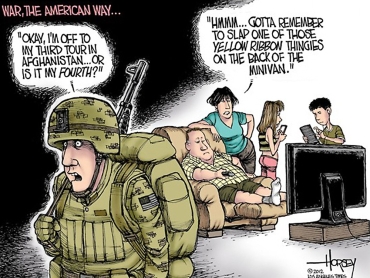
Key
among these is the latter point as it applies to
any hypothetical new country we might be thinking of
warring against. That is, what will that
country look like when our happy warriors come home
and we are no longer spending any money to support
it? Will it be stable and prosperous, enjoying a new
form of participatory government, or will it be an
oozing, war torn abscess of a nation hanging on the
rump of the world for the next 50 years… as North
Korea is and it is increasingly looking like Iraq
and Afghanistan may be too?
As we said then, if we as Americans were to be so lucky as
to actually be briefed on these kinds of things before a new
war gets underway, and also lucky enough to actually have a
President and Congress that has enough respect for the
Constitution to declare a war instead of just segueing into
it with the same insouciance that they apply to forming a
budget, then we might be able to get into one of these wars,
win it, and leave behind a successful, free, peaceful,
prospering country, instead of the kind of mess we see the
world being dotted with today.
Moving from this point to one that
runs parallel to it, in this month’s article we are
concerned with how technology impacts these hot little wars.
That is, what impact does technology have on the outcome of
the kind of wars we are increasingly taking on today? If the
American public is ever to know what to expect when America
next goes to war, it needs to know more than just how many
soldiers and how much money it will cost. It also needs to
know how a war will shape up as it gets underway. And to
know the answer to that, one must know of the impact today’s
technology has on a war's effort, because in the end it is
technology that shapes warfare.
Continued at top of page,
column at right
This page last
updated 3 June 2012. New content is constantly being
added. Please check back frequently.
 Posted
3 June 2012 - Posted
3 June 2012 -
Some new pictures of Candidate Martin Webber, OCS Class
42-04, courtesy of his son Tom Webber,
a
Senior Biologist at the Florida Museum of Natural History.
Check out the High Definition pictures of a commemorative
holster given to Martin by his associates in the French
Signal Cops. They're fascinating. Thanks Tom!

Posted
1 June 2012
-
Candidate Gerald Poirier, from the very
first
Army Signal OCS Class—Class 41-01, that graduated on
September 30, 1941—sent us a short story highlighting the
tensions and rivalries between fellow Candidates in that
first class. It's short but poignant... and considering that
it's coming from a 94 year young alumnus of the first OCS
class, it's worth reading! Thanks LTC Poirier for sending it
in to us. Thanks too for your service to our country. You
exemplify all that's good about America and that's great
about Army Signal Corps Officers. We who followed in your
footsteps salute you. Click here to read the story
.
Enjoy!
Posted
1 June 2012 -
New class pictures for Class 44-35, courtesy of Don Mehl.
Don suggests you compare the smiles on the Candidates faces
before starting OCS and after graduation. He's right! It's
hilarious the stories that are told in those smiles. Click
here
and scroll to bottom of page. Click on pictures and zoom in
to see details.
Posted
1 June 2012 -
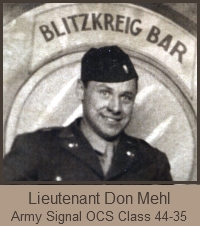
Along with a new bio for Candidate Don Mehl, Class
44-35, we have posted a number of interesting pictures Don
sent us from his time in the service. Among them are
pictures of Candidate Robert Price (OCS Class 43-27) and
Mahlon Doyle (OCS Class 45-48). It's a treat for us to find
pictures of other members from other classes hidden inside
of Don's own photos! Check out Don's bio here
,
and enjoy looking through his pictures for Price and Doyle
too. Thanks Don!
Posted
1 June 2012 -
A great new collection of WWII archive material on
his dad has been sent in by David Singer, son of Candidate
Henry Singer (Class 42-06). Copies of orders, citations,
pictures, and lots of background stories are included too.
Captain Singer had a busy career as a Signal Officer, and
his stories are fascinating. Among the more interesting is
one relating to a commendation received from Winston
Churchill.
There is also included a set of orders
and a picture of one of the most memorable inter-unit
baseball championships played on the island of Corsica in
the Mediterranean. Dubbed the Corsican
softball tournament, the game was written up in Stars &
Stripes and featured David's Dad as the winning pitcher. Click here
to go to Candidate Singer's Class page, then scroll
down and click on the last name Singer.
This is a great family history and well worth
archiving for the future.
Our thanks to David
for taking the time to gather the information and send it to
us.
Posted
1 June 2012 -
This month we added another speech to our archive of reunion
and other speeches given by Signal OCS Officers. This one is
by Colonel Holwick from a speech he gave at the OCS
Memorial in October 2007. Click here
to jump to the page where our speech archive is being built
and look for the title
Black Metal Arch.
If you wonder what you should think of your own time
in Army Signal OCS and the Signal Corps, you should read
this. It will put a perspective to what you did for your
country. Got a speech of your own from a past reunion or get
together? Send it in to us, and we'll post it here too.
Posted
22 May 2012 -
Available now on our PX page:
Top Secret Communications
of WWII,
by Don Mehl, soon to be 90 years old, and a
graduate of Class 44-35. This is a great book that traces
the history of SIGSALY and SIGTOT, the most secret and
highest level cryptographic systems of that war, and the
forerunners to today's digital communication platforms. Buy
a copy and read it. It's great story and you'll be glad you
did.
Posted
8 May 2012 -
A great family story of 3 brothers that went through Signal
OCS at the same time, during WWII. Jeff Doran, son of
Brendan Joseph Doran of Class 42-02 sent in both the story
and a great set of pictures to go along with it. He included
Class pictures of two of the several sections of 42-02,
which you can see on the Class page. You can read the story
of these three brothers here
or check out the Class Pictures for Class 42-02 here
.
Our sincere thanks to Jeff for helping us archive the story
and pictures of these three great Army Signal Officers, all
members of our greatest generation.
Posted
1 May 2012 -
A series of 7 great new Class pictures showing Class 43-23
at their graduation dinner,
thanks to MAJ (R) Richard Green's personal Archives.
Click here to see them... you'll love them... and help us identify some of
the class members.
Posted
1 May 2012 -
Two new Class pictures for Class 43-29.
Click here to see them and help us identify some of
the class members.
Posted
2 April 2012 -
Constant research by MAJ (R)
Green has turned up info on one of the more well learned of
our WWII Army Signal OCS graduates; and someone instrumental
in the design and production of the AN/TPS-10 X-Band "L'il
Abner" Radar System. Click here to go to the 14-43 Class
Page, then scroll down the right column list of names to
find Candidate Benjamin Lax. Click on his last name to read
his fascinating bio.
Posted
1 April 2012 -
Amazing life story for a Candidate we never knew was
part of the OCS program until recently.
Michael Lorfing (Class 07-67)
found it in a Dallas newspaper and sent it on to MAJ
(R) Green. He sent it on to us, and now you can read it too!
It's about Jerry S. Stover, OCS Class 41-01, and it's a
great read of a great life. Click here
to jump to the 41-01 Class Page, then scroll down the list
of names until you find "Stover," right click on his last
name, and enjoy the bio we have reproduced there. Thanks to
both Michael Lorfing and MAJ Green for their capturing this
lost soldier and bringing him back to barracks.


|

|
Continued from left column...
 Why does the public have to know how
our technology... more specifically how today's emerging
technologies... affect warfare? Because the depth and
breadth of pain the American public feels in any new war
effort will be in direct proportion to the ability of the
war fighters, on both sides, to leverage the technology they
have access to to their benefit. Simply put: no pain, and
the American public will let the military fight a war
forever, until everyone is satisfied that it has been won
the way it should be; too much pain in too short a time, and
the American public will demand that the war be put to an
end quickly and everyone brought home, regardless of whether
we are winning or not. And just to be clear, in this case
pain does not just mean the loss of America’s sons and
daughters in combat. It also means the kind of damage to
America’s national pride and image that a poorly conducted
war effort can bring (think: Abu Ghraib). Why does the public have to know how
our technology... more specifically how today's emerging
technologies... affect warfare? Because the depth and
breadth of pain the American public feels in any new war
effort will be in direct proportion to the ability of the
war fighters, on both sides, to leverage the technology they
have access to to their benefit. Simply put: no pain, and
the American public will let the military fight a war
forever, until everyone is satisfied that it has been won
the way it should be; too much pain in too short a time, and
the American public will demand that the war be put to an
end quickly and everyone brought home, regardless of whether
we are winning or not. And just to be clear, in this case
pain does not just mean the loss of America’s sons and
daughters in combat. It also means the kind of damage to
America’s national pride and image that a poorly conducted
war effort can bring (think: Abu Ghraib).
Continuing with our thinking: in our
view, more than any other force, the availability or lack of
availability of technology has a dramatic impact on how a
war is fought, who comes out on top, how long a war must go
on before someone does come out on top, and how effective
post-war governing leaders will be in helping their
country return to peace. One need only look at the impact of
drones on Afghanistan to see what we mean re. technology
shaping war.
When
Afghanistan first got underway effective drone technology
was in its infancy, with many military leaders seeing it
more as a defocusing video side game than a useful piece of
armament to have in their basket of tricks. Now, 11 years
later, drones have become more relevant to the war effort
than ISAF itself. The same might be said for Facebook,
YouTube, Twitter and the myriad other social network
platforms that let the enemy get their word out in ways that
Ho Chi Min could have only dreamed of. Think back to the
viral way in which the Abu Ghraib photos spread around the
world in less than an hour, or the burning of the Korans in
Afghanistan led to over 3 million tweets in 24 hours, and
you will see our point.
Technology has a great impact on warfare, even non kinetic
technology.
[1]
Technology, more than any other
outside force, shapes warfare. In trying to figure out how
effective America will be in fighting any war then, one must
take into effect how well we use technology … both kinetic
and non-kinetic… to fight a war, as well as how well our
enemy uses it.
Bear in mind here that when speaking
of technology we are not talking of the old traditional
forms of technology such as those used for communication
interception and the like. Those forms have been around
since the very first recorded war ever fought—between Sumer
(in modern Iraq) and Elam (a region that is now part of
Iran) in 2700 BC. Instead we are talking about emerging
technologies, of the kind mentioned earlier. These emerging
technologies… like those used in drones, or those used by
Bradley Manning to leak military secrets to WikiLeaks, are
what we are speaking of. Emerging technologies… the kind
that not only shape how a war is fought, but are also shaped
by it.
Note again the last part of the
previous sentence. Strange though it may seem, the unique
thing about technology is that while it has a dramatic
impact on a warfare, conversely it is war itself
that shapes technology. One more time: war itself shapes
technology, not warfare. Clarifying this point
then; among the three—technology, warfare and
war—technology shapes warfare but not war, while on the
other hand war shapes technology but not warfare.
 If this is true, then we can also
say that military technology is not deterministic. In other
words, just because a particular military technology was
instrumental in winning a war in the past, you can’t assume
that the inevitable consequence of an improvement to this
antecedent form of technology will cause the state of
affairs today to result in another win. Military technology
in and of itself is not deterministic. Rather, it opens
doors as to what can be. Because of this, emerging
technologies that are based on successful antecedents will
not open any more doors for the managers
of war than a form of technology that has not yet proven
itself useful or successful. Regardless of a technology's
past history and evolution, there is no way to determine
whether it will intrinsically spawn a successful form of
usage when applied in a wartime environment. What does
determine the success of a technology is how many of the
doors that technology opens man decides to walk through.
Thus, the more doors a technology opens to possible means
and methods of use, the greater the availability
of and larger number of paths there will be to wartime success. If this is true, then we can also
say that military technology is not deterministic. In other
words, just because a particular military technology was
instrumental in winning a war in the past, you can’t assume
that the inevitable consequence of an improvement to this
antecedent form of technology will cause the state of
affairs today to result in another win. Military technology
in and of itself is not deterministic. Rather, it opens
doors as to what can be. Because of this, emerging
technologies that are based on successful antecedents will
not open any more doors for the managers
of war than a form of technology that has not yet proven
itself useful or successful. Regardless of a technology's
past history and evolution, there is no way to determine
whether it will intrinsically spawn a successful form of
usage when applied in a wartime environment. What does
determine the success of a technology is how many of the
doors that technology opens man decides to walk through.
Thus, the more doors a technology opens to possible means
and methods of use, the greater the availability
of and larger number of paths there will be to wartime success.
The relevance of all of this to our
discussion of the impact of technology on war is that not
knowing where emerging technologies have their greatest
impact can be dangerous to a war leader; dangerous to the
point of making it possible to lose a war if one is not
careful.
One can see a bit of this happening
in the use of drones in Afghanistan. Clearly, military
leaders now know that a) the plan is that everyone be out of
Afghanistan and home by 2014, b) with only two years to go,
the last thing the American public will stomach is a large
loss of life at this stage of the war, so if the desire is
to wrap it up quickly you might as well scratch combat
operations off the list, c) in a couple of years there won’t
be anyone left in Afghanistan to fight this war with, and d)
in spite of all of this, and regardless of whether we are
there or not, the war will go on for at least another 7 – 10
years anyway, and likely result in something future
historians will classify as another “Vietnam style defeat”
for America.
With this in mind, how can anyone
blame today’s military leaders from turning to drones as
their surrogate fighting force? After all, pretty soon it'll
be all they have left.
This latter point aside, whether they are blamed
or not, unfortunately, drones—or any other form or
combination of emerging technologies for that matter—won’t
help our commanders win the war in Afghanistan. Depending on
technology to solve what couldn’t be solved with boots on
the ground creates in a leader a false chimera not worthy of
his carrying the title Combat Commander.
Why? Because technology shapes
warfare, not war, and especially not its outcome. War, on
the other hand, as we said above, shapes technology.
The important point here is to
distinguish between war and warfare, and the impact
technology has on both of these.
LOOK AT THIS!
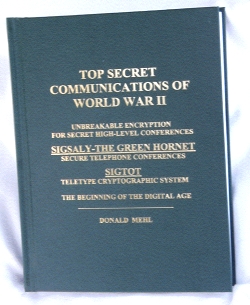 We’ve
added something special to our PX page this month. It’s a
book by Candidate Donald Mehl, Class 44-35. About to be 90
years young on his next birthday, Don recently sent us a
bunch of neat pictures of his time in the Army. He also took
the time to tell us about a book he wrote on his wartime
assignment setting up and operating the Top Secret SIGSALY
and SIGTOT communication systems (also known as Green Hornet
due to the background masking noise it made), so advanced in their form
of cryptography and encryption that while the system was
built for use in WWII it was kept secret until 1976. Don
told us that as civilians he and his staff got letters from
the War Department reminding them that they were still
covered under the law and not to reveal what they knew about
the technology or its application. When the technology
itself was finally declassified under the freedom of
information act, most of the people who knew of the system
were not around to tell the world about it. So Don took on
the task and wrote this 201 page hard cover book called
Top Secret Communications of WWII. It’s a great read
and an absolute must for anyone who thinks of themselves as
being informed on the Signal Corp’s history, WWII,
electronics, communications, cryptology, or encryption… or
just has an interest in reading a few of the never told
stories and vignettes of President Roosevelt, Churchill and
the other leaders that marshaled WWII to success and
depended on this system to do so. We’ve
added something special to our PX page this month. It’s a
book by Candidate Donald Mehl, Class 44-35. About to be 90
years young on his next birthday, Don recently sent us a
bunch of neat pictures of his time in the Army. He also took
the time to tell us about a book he wrote on his wartime
assignment setting up and operating the Top Secret SIGSALY
and SIGTOT communication systems (also known as Green Hornet
due to the background masking noise it made), so advanced in their form
of cryptography and encryption that while the system was
built for use in WWII it was kept secret until 1976. Don
told us that as civilians he and his staff got letters from
the War Department reminding them that they were still
covered under the law and not to reveal what they knew about
the technology or its application. When the technology
itself was finally declassified under the freedom of
information act, most of the people who knew of the system
were not around to tell the world about it. So Don took on
the task and wrote this 201 page hard cover book called
Top Secret Communications of WWII. It’s a great read
and an absolute must for anyone who thinks of themselves as
being informed on the Signal Corp’s history, WWII,
electronics, communications, cryptology, or encryption… or
just has an interest in reading a few of the never told
stories and vignettes of President Roosevelt, Churchill and
the other leaders that marshaled WWII to success and
depended on this system to do so.
 You can buy a copy of Don’s book on
our PX page, and best of all, with
Don’s gracious help your payment will be tax deductable as
in this case we are donating our profits from the sale of
Don’s book to our scholarship program. You can buy a copy of Don’s book on
our PX page, and best of all, with
Don’s gracious help your payment will be tax deductable as
in this case we are donating our profits from the sale of
Don’s book to our scholarship program.
We have reproduced a review of the
book published a while ago in CRYPTOLOGIA magazine.
CRYPTOLOGIA is a scholarly journal. The review itself
was written by Dr. Louis Kruh, its editor at the time.
Please take a few moments to read the review; you’ll find it
absolutely mesmerizing and informative… so much so that you can imagine
how good the book itself must be. Click here to read the review
. Click on the PX button in the left column to buy a copy.
And click here to read Don Mehl’s bio
and enjoy a few rare and exceptional pictures
of places seldom seen in the WWII photo albums we come
across.
Our sincere thanks to Don for allowing us to tell you of
SIGSALY, SIGTOT and Green Hornet. In our view Don and the
men who served with him in the 805th Signal Service Company
are members in noble standing of America's greatest
generation, having had the direct impact they did on the success of WWII.
Remember Way Back
When...?
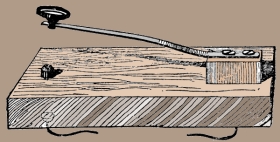
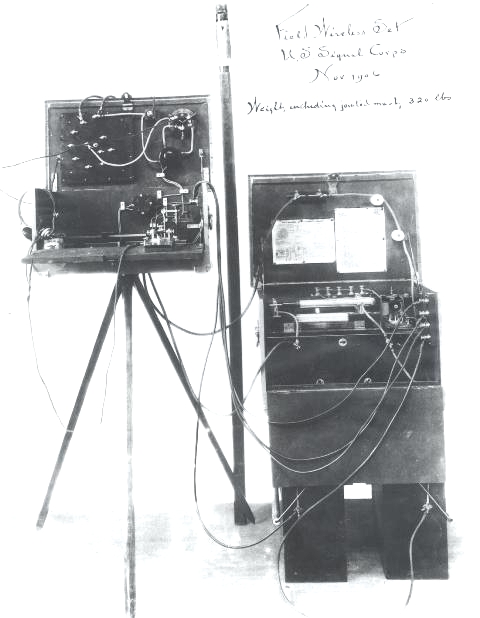
There was a time when almost all communication
was handled via what were called Q and Z Codes. But what were these codes,
and how would someone know when to use them and what they meant.
 Published
by the Signal Corps during the very early years of radio telegraphy, most of
the codes were based on Morse Code, a language commonly used at the time for
continuous wave (CW) telegraphy. Q and Z codes became useful to the point of
necessity as CW radio transmission was unreliable, with circuits fading in
and out throughout a transmission. Later, as single-sideband (SSB) telephony
came into vogue in the ‘60s, the need for Q and Z codes diminished. Even so,
by then their usage was so extensive that they continued to be favored as a
means of phrasing messages. Published
by the Signal Corps during the very early years of radio telegraphy, most of
the codes were based on Morse Code, a language commonly used at the time for
continuous wave (CW) telegraphy. Q and Z codes became useful to the point of
necessity as CW radio transmission was unreliable, with circuits fading in
and out throughout a transmission. Later, as single-sideband (SSB) telephony
came into vogue in the ‘60s, the need for Q and Z codes diminished. Even so,
by then their usage was so extensive that they continued to be favored as a
means of phrasing messages.
As a Signal Corps Officer, you needed to know
this stuff.
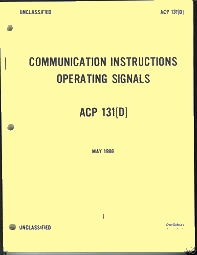
 The
best way to learn about Q and Z codes was to refer to the publication known
as ACP-131. Published to help NATO countries communicate with each other,
over time it went through several revisions. Fundamentally, what ACP-131 did
was list the words and phrases that corresponded to each Q or Z code. These
phrases, when translated into any of the NATO member country languages,
could then be cross referenced by that language speaker back to the
appropriate Q or Z code that needed to be transmitted to the receiving
party. As to the codes themselves, their purpose was to speed up and make
more reliable the communication that was needed between the ships and troops
of the various NATO nations. They did this primarily by creating a common
language that each NATO member could use, as well as reducing the load
placed on the usually unreliable circuits involved back then. Not
surprisingly, since the U.S. set up the Q and Z codes to begin with, they
were also extensively used within the U.S. military itself. The
best way to learn about Q and Z codes was to refer to the publication known
as ACP-131. Published to help NATO countries communicate with each other,
over time it went through several revisions. Fundamentally, what ACP-131 did
was list the words and phrases that corresponded to each Q or Z code. These
phrases, when translated into any of the NATO member country languages,
could then be cross referenced by that language speaker back to the
appropriate Q or Z code that needed to be transmitted to the receiving
party. As to the codes themselves, their purpose was to speed up and make
more reliable the communication that was needed between the ships and troops
of the various NATO nations. They did this primarily by creating a common
language that each NATO member could use, as well as reducing the load
placed on the usually unreliable circuits involved back then. Not
surprisingly, since the U.S. set up the Q and Z codes to begin with, they
were also extensively used within the U.S. military itself.
Whether it was fadeouts caused by weather
conditions, low transmission power, RF interference, poorly laid-out
transmitting antennas, reflective atmospheric layers, or something else, the
bottom line was that in order to send a reliably readable message, or be
able to reliably read that which was received, the language used to
communicate between stations had to be simplified and reduced to an
uncomplicated code. That’s what Q and Z codes did.
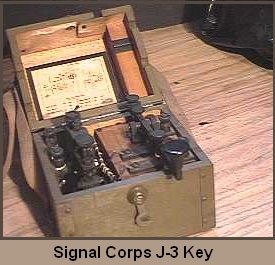 A
simple example will serve to make this point: an operator communicating by
CW radio, and wanting to know how the other operator was receiving the
signal, could send out a message on his key in Morse Code saying “How are
you receiving me?” A
simple example will serve to make this point: an operator communicating by
CW radio, and wanting to know how the other operator was receiving the
signal, could send out a message on his key in Morse Code saying “How are
you receiving me?”
With the poor signal strength of the time, what the
receiving party was likely to receive would be a garbled set of letters that
made no sense at all… perhaps something along the lines of “////ow///r///y///urece///n//m”
With Q codes the sending party could avoid the
lengthy hammering on the keys needed to send a full text sentence and
instead send a 6 letter code. In this case he would simply send INT QRK.
Meaning of course, “interrogatory QRK” where Q stood to indicate that a Q
code was being used and RK stood for the intelligibility, legibility or
receivability of the transmission.
If the message was received and understood, it
was answered with QRK5, meaning loud and clear.
 If
one looks at the simplicity of the code, when compared to sending full
length versions of sentences crafted in Morse Code, and adds in the utility
of being able to use this common code as a means to overcome language
differences such as that between French and English, one can see why Q and Z
codes came into existence. Cutting down on the amount of pounding of the
transmission key, the amount of power needed to get the message through, the
reliability of the code (even when only a letter or two came through), and
its ability to overcome language barriers among allies, the Q, Z codes and
ACP-131 became invaluable. If
one looks at the simplicity of the code, when compared to sending full
length versions of sentences crafted in Morse Code, and adds in the utility
of being able to use this common code as a means to overcome language
differences such as that between French and English, one can see why Q and Z
codes came into existence. Cutting down on the amount of pounding of the
transmission key, the amount of power needed to get the message through, the
reliability of the code (even when only a letter or two came through), and
its ability to overcome language barriers among allies, the Q, Z codes and
ACP-131 became invaluable.
As for the difference between them, Q codes
were intended for civilian and military use while Z codes were for military
use only. Finally, while Q and Z codes were not intended for use in voice
communication the fact that they were so extensively used helped assure the
uniform acceptance of the verbal character recognition system that ushered
in ALFA, BRAVO, CHARLIE, and the rest of our old friends.
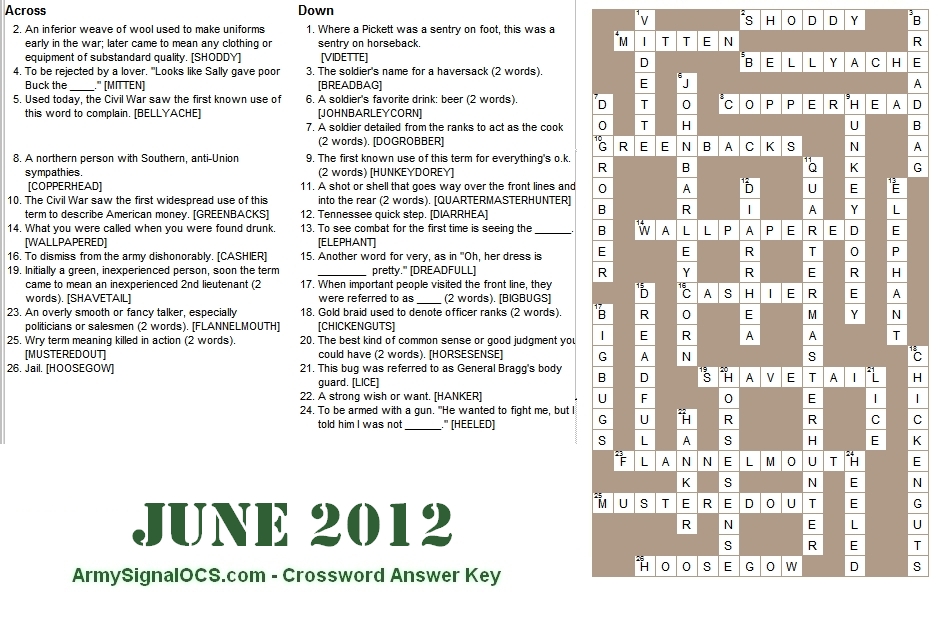
June's Crossword Puzzle
 Theme:
Civil War Slang Theme:
Civil War Slang
Hints:
Join two word answers together as one complete word.
For answer key to this month's
puzzle,
see icon at bottom of page
|