How
the Signal Corps May Have Singlehandedly Changed The World
This is the continuation of a story begun on our July 2013 Home Page. To go to an archived version of
that page, click here: July
2013 Home Page Archive. To return to this
month'sactual Home Page, click on the Signal Corps
orange Home Page menu item in the
upper left corner of this page.
continuing...
The reader should recognize that this approach took the Signal Corps out of
the purview of simple communications and put its leaders, and especially
those who served the Signal Corps as researchers, in the seat of the war
fighter in the field. The result of this was that in a de facto manner the Signal Corps not only insinuated
its way way into the War Department rooms where strategy was set, but in the
process placed itself in the middle of the field of combat where the tactical
implementation of the strategies being developed would play out, via the
actions of the war fighter that prowled the field in search of the enemy.
The Signal Corps did this because it knew that from the perspective of these soldiers there was always a need for better
ways to turn technology to their advantage… and the Signal Corps in the late
1930s not only knew how to do this but was determined to help get
this technology and the arms that go along with it into the hands of the
soldiers
who needed it.
One can see an example of this belief at work if one considers the role
the Infantry normally plays in looking at newer forms of technology that
might help a ground pounder fight better. Where Infantry commanders of the
time might consider the pros and cons of the (then) newly emerging trend
towards using tanks in support of infantry, the Signal Corps looked at the
question from a more holistic viewpoint, paying attention to not just what
the infantry might do with a 30 ton steel box on tracks, but how the people
inside of that tank were going to communicate with the world, aim their
weapons, correct for target errors, and otherwise act as part of a fighting
whole instead of a lone wolf in a tuna can prowling the battlefield.
By stepping forward to take on the role of trying to guess what the future
needs would be of the tactical users that would occupy the next war’s battle
space, the Signal Corps was taking on a strategic role that had not been
defined for it… but at the same time had not been well defined in the 1920
National Defense Act either. For whatever the reason, the principal concern
of the War Department throughout the 1930s was simply maintaining the
manpower needed to fulfill the military’s peacetime missions, not worrying
about what was over the horizon or what war might come next. That being the case, someone had to step up
to the task of pushing the envelope of strategic thinking as it applied to
the use and application of new technologies to prepare for the next war—new
technologies in both communication systems, improved methods for command and
control, the forms and types of arms that might be developed with the
new technologies that were becoming available, and the means for
manufacturing these and bringing them to the field.
Getting the Job Done
Recognizing that the War Department wasn’t interested in these areas but was
leaving it up to the service Chiefs to worry about it, the Signal Corps
stepped forward. In particular, it charged itself with either coordinating
or directly leading in the research, design, development, preparation and
production of the technologies, systems, equipment, logistics, training, and in many cases the
actual arms themselves that would find usage in the next war.
For the Signal Corps, four key tasks had to be managed if the kind of arms
new technology was making possible would prove useful in the next war. These
included 1) developing and fielding the signal equipment and systems needed
to enable the war fighters to communicate, 2) restructuring the policies and
procedures that underwrote command and control so that they would work when
executed by means of the new communication systems being fielded, 3)
developing the non-communication technical and mechanical systems that would
enable the new arms being brought to the field to be effective (think: the
fire control systems that enabled Coast Artillery to function), and 4) in
many cases researching and developing the new arms themselves (think:
airplanes, radar, etc.).
Without the Signal Corps addressing these issues many of the newer forms of
armament used in WWII never would have made it to the battlefield. Worse, if
they did, their tactical users would be unable to do anything more than
stand around talking about what they wish they could do with these new arms
but were unable to because they had no idea what the unit next to them was
doing, had no idea what higher level headquarters expected them to do, and
in many cases could not even use the weapons themselves because the
mechanical systems that needed to be controlled to make the weapons
effective could not be controlled without the Signal Corps’ input. All in
all, if it were not for the Signal Corps preparing these things between the
wars, America would have found it a tough row to hoe to hold its own when
WWII rolled around. What we can say then is that because the Signal Corps
took it upon itself to research and develop many of the technologies,
systems and hardware needed by its sister branches, when WWII came to pass
the U.S. was able to field superior technology, and use it effectively.
Just who were these sister branches that depended so much on the Signal
Corps to enable their fighting capabilities? By far the biggest branch
beholding to Signal Corps support at about the time WWII was appearing on
the horizon was the Infantry, where not even the lowly but essential man of
the hour the Infantry platoon sergeant could do his job without Signal Corps
support in the way of the provision of equipment for his tactical use in the
field. This was followed by his equivalent in the Artillery and especially
the Coast Artillery (think: heavy artillery), where, for example,
searchlight stations played an essential role and the Signal Corps, in the
form of both men and material, enabled these units to be integrated into the
whole. Then there was the Army Air Corps, where the nine-man crew of a heavy
bomber could not fly a mission without the Signal Corps’ support across all
elements from communication to targeting and navigation. Finally, there was
the regimental message center, the essential nexus that glued so many of
the other elements of the military battlefield together.[1]
As to what exactly the Signal Corps did to enable all of this war-fighting
capability, much of it fell into the roles of research (the study of
emerging technologies and what use they might play in combat), development
(design, test and acceptance of equipment to improve all manner of fighting
capacity from communication, to command, control, and use of the armament
itself), and manufacture (selection of and oversight of the means of
production of the resulting products). And of course, along with these three
key roles the Signal Corps also performed administrative duties, training on
the use of the systems involved, logistics (distribution), and the classic
field duties of acting as the combat arm responsible for assuring that the
message got through.
In terms of how the Signal Corps succeeded in doing all of these things, it
had a trick up its sleeve. Its trick involved employing the practical
approach of assigning a group of researchers from Ft. Monmouth to scrutinize
new commercial product releases for those that used emerging forms of
technology and, while keeping in mind that the devices were designed for
civilian use, look for those that might, with minor modifications, be
repurposed for military use. Through this simple expedient the Signal Corps
was able to leverage its own research efforts by piggy backing its goals on
the shoulders of those captains of industry that caused the United States to
not only lead the world in technological development but produce leading
edge, workable, reliable products in the process.
This approach helped streamline the Signal Corps’ operations between the
wars such that it became a branch with a mission that was largely
administrative, where the administrative work it performed was focused on
turning out superior military equipment based on either commercial or
near-commercial products that had undergone modifications to meet the
military’s needs. This caused the Signal Corps to develop deep skills in not
only research, as a means to determine what was needed in the way of new
technology and systems, but also procurement—including the elements of
planning what equipment was needed, searching out where within the
commercial sector there were companies with products that most nearly met
the defined need(s), and contracting for the modification and production of
the required devices, including making sure that enough units would be
produced and made available so that it made sense to standardize on the new
devices. Of course, coupled with this the Signal Corps took on
responsibility for training in the use of not only the equipment but also
the systems, processes, procedures, and protocols required to make the new
equipment and arms effective in combat... what the military calls command
and control.
The Signal
Corps Refines Its Efforts
As the 1920s wore on and drifted into the late 1930s, the effect of the
Signal Corps’ efforts began to reshape the look and feel of the armed
services. By the time 1940 arrived the bulk of the equipment the Signal
Corps had introduced into the military fell into two categories: 1) straight
off the shelf civilian models and/or equipment only slightly modified from their
civilian counterpart to meet the military’s specific needs, and 2)
completely new releases of technology not seen before, and designed for the
military’s specific use. Of the two the first type was by far the most prevalent, with only a few truly new scientific breakthroughs falling into the
second category.
It was at about this time that the Signal Corps began to worry about
assuring that all of the equipment and hardware delivered met the standards
the Signal Corps set for each system it was designing. Thanks in no
small part to the efforts of the researchers working at Ft. Monmouth’s
laboratories, the concept of MIL-SPEC (aka MIL-STD) began to take on meaning
and become the norm throughout the military. Today
the concept of “defense standards” has blossomed from those early days to
include MIL-PRF, MIL-DTL, and at least three sets of standards that define
the standards themselves (MIL-STD-961E[1], MIL-STD-962D[1], and
MIL-STD-967[1]).
These three steps... that of determining based on internal
military research what technology and systems might be needed to fight the
next war, seeking products to fill those needs from the civilian
sector, and assuring that the products delivered fit a common set of
standards... became the norm for the Signal Corps in the period leading up
to WWII. After all, with the military between WWI and
WWII operating on a greatly reduced budget and with an even greater
reduction in manpower there were few alternatives available other than
turning to the civilian sector. Given these facts, it was only logical to
put the manpower available to work figuring out what was needed, primarily
by researching what could and could not be done with the emerging
technologies of the times, and then seeking off the shelf products that, with
minor modifications, could meet the stated needs of the military. Rather than have the
military try to build the systems themselves, it made sense to partner with
American industry and have them do it. It was logical, cost
effective, and it worked.
Not to be missed in all of this however is the fact that the Signal Corp's
discipline in establishing standards, processes and procedures for doing all
of this pushed American industry in the direction of bettering their own
internal controls. That is, in order to do business with the Signal Corps
and reap the reward of profit that being a supplier to the military
promised, an American company had to greatly increase its own level of
performance to match a set of higher standards than it had ever had to work
to before. This forced an increase in the ways and means by which a company
managed both its production and itself, with the result that across America
companies began to work to an American industry standard that was far and
away better than that of most other companies elsewhere in the world. Looked
at from the distance of today, what happened back then was almost as if the
managers of American companies in the 1930s experienced a simultaneous crash
course in industrial best practice, with the result that within a span of
some 10 years American industry became the best in the world. In terms of
those factors that helped make America the world's first Superpower, this
was among the most important... and it was the Signal Corps that fostered
it.
Whether this improvement in the means of commercial production was planned
or not, it happened; but it wasn't the only good thing that happened from
the Signal Corps' initiatives between the wars. One of the other benefits
that occurred but was unforeseen was the extent to which this new approach to
sourcing better war fighting systems would permeate the military… all the
way down through the years to today’s modern Army. If one looks at the progression of this
“outsource phenomenon” one can see an insidious but nevertheless necessary progression beginning to
take place.
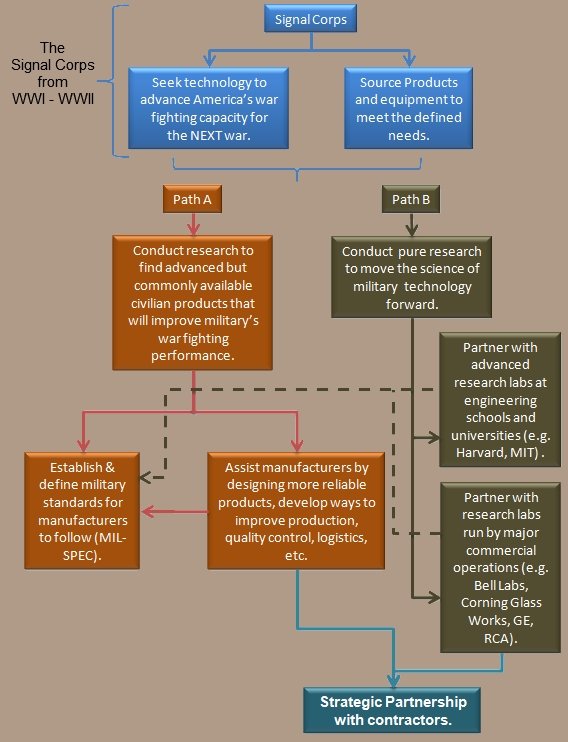
It began with the Signal Corps taking on two research roles: 1) conduct
research whose purpose was to find military use for advanced but commonly
available off the shelf civilian products, while at the same time 2) conducting
additional pure research for the sake of the research itself, as a means to
move the science of technology forward.
In the former case the intent was to find ways to, for example, employ in
the military arena civilian forms of radio communication such as that being
used for normal civilian radio broadcasts. In the latter case the intent was
to push the envelope of known science, such as was done by the Signal Corps
when it developed one of the world’s first thermal infrared indium gallium
arsenide (InGaAs) detectors (used in early radar detector circuitry).
If we consider the sourcing of civilian produced product solutions “Path A,”
and the research for the sake of research “Path B" we can see how these two
initial efforts set in motion a series of fundamental changes in how the
U.S. military sourced its equipment; changes that are still in effect today.
Under Path A it quickly became evident that the quality and reliability
standards to which civilian products were being made at the time were not up
to the kind of rigorous use the military imposed on them. Because of this
the Signal Corps found itself having to not only research what kind of
civilian systems it might be able to bring into the military as a means to
modernize it, but also how those products could be made more reliable. This
of course forced the Signal Corps to develop close working relationships
with the civilian manufacturers of these products, with the Signal Corps
slowly and incrementally finding itself acting as the research arm for its
civilian “partners.”
One can see this at work in the way the Signal Corps researched better means
of manufacturing vacuum tubes, going so far as to actually design production
line test equipment to assure that the final finished goods met the new
MIL-SPECs the Signal Corps set. Thus, in the late 1930s and early 1940s the
Signal Corps found itself getting into bed with commercial contractors,
helping them by not only setting specs that they could work to, but showing
them how to meet those specs. While a necessity at the time, the reader can
see that the Signal Corps’ effort involved nothing less than it becoming the
de facto research and development arm for a number of civilian
manufacturers.
On Path B the Signal Corps found itself racing to stay in front of the
developing needs of the Path A product selection researchers and their
manufacturing partners. To help make sure that the theoretical research the
Path B boys were working on stayed in front of the military’s need, a new
group called the Signal Corps Laboratories (SCL) was formed on June 30,
1930. Officially it was part of the U.S. Army Signal Corps, and was located
at Fort Monmouth, New Jersey. Unofficially, while it may have been on the
Monmouth base, it acted as though it was an independent research institute,
not necessarily governed by military dictates. Over time this proved to be a
good thing, as the independence that the SCL took on for itself served
America and the military well. Most notably, the country and military
benefited from the many, many technological and scientific breakthroughs
that SCL produced.
Among the more than 17 labs that made up the SCL group were the Signal Corps Radio
Laboratories at Ft. Monmouth (including the Eatontown Signal Laboratory,
Toms River Signal Laboratory and Squier Signal Laboratory), the Signal Corps
Aircraft Radio Laboratory at Wright Field in Dayton, Ohio, the Electrical
and Meteorological Laboratory (Ft. Monmouth), the Signal Corps Laboratory at
the National Bureau of Standards (Ft. Monmouth), the Subaqueous (Sediment)
Sound Ranging Laboratory at Fort H. G. Wright, New York, the Radio Position
Finding Laboratory at Ft. Hancock, New Jersey, the Camp Evans Signal
Laboratory (including the Aberdeen Field Laboratory and the Fort Fisher
Field Laboratory), Camp Coles Signal Laboratory, Florida Field Station
Laboratory, the Radiation Laboratory (more usually referred to as the Rad
Lab) at MIT (Massachusetts Institute of Technology), an automatic target
tracking laboratory located at Bell Telephone Laboratories, and later in the
1950s a large laboratory complex called the Hexagon, that was built at Ft.
Monmouth. Through the years the SCL had a number of name changes, including
being called the Signal Corps Engineering Laboratory (SCEL) group, and
eventually simply the Evans Signal Laboratory (ESL).[2]
Of interest to us here is the mention above of the early relationships
developed with MIT and Bell Labs, as well as with Harvard University. With these
three relationships Path B for
the Signal Corps began moving in a new direction, as the researchers at Ft.
Monmouth sought and built close associations with engineering schools and
universities across America… schools with the capacity to bring to the
Signal Corps leading edge expertise in every field of scientific, technical,
engineering, and mathematical study then known—AND—as they also sought to
build close working relationships with America’s most powerful captains of
industry. In this latter category companies like RCA and Western Electric
stand out as examples of businesses that developed close relationships with
the Signal Corps. These companies, and many others, had their own research
labs and could help the Signal Corps with their tasks, but also manufacture
the systems and equipment the Signal Corps had its eyes on.
With this dual effort to build close, strategic relations with both the
source of scientific knowledge and the companies that commercialized that
knowledge it was inevitable that the U.S. military would drift towards
outsourcing not just military equipment development, but also the research
that determined what kinds of military systems, equipment and technology
would be developed. And from there it was just a short hop to outsourcing
the military’s manpower needs itself. After all, if the commercial sector
can handle research and development leading to product selection, then why
can’t they handle cooking, cleaning, transportation, security, installing
and maintaining the military’s equipment and systems, and all of the rest?
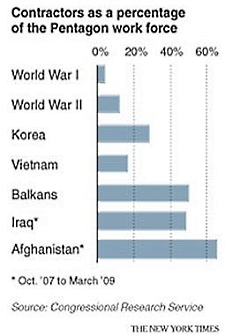
Where did his all lead? Answer: right where we are today…
to a point where
the number of civilian contractors, researchers, advisors, consultants,
security people, and just plain workers working for the DOD outnumber the
men and women serving on active duty. And we can thank the Signal Corps for
this turn of events.[3]
Was it a mistake back then to go down this path? Has the military gone too
far? Looking at how America’s military today is dependent on the support of
civilian contractors to do everything from run the systems it relies on in
combat to feeding the soldiers themselves and even providing security in
many combat areas, one could be forgiven for
thinking “perhaps yes.” However, from the perspective of America at the
beginning of WWII, the answer was a most definite “no.”
Back then the Signal Corps’ move in partnering with those who ran America’s
industrial complex, in a joint effort to modernize the U.S. military, proved
to be a brilliant decision. It brought to the U.S. military systems from radar
to radio direction finding, targeting systems, radio telephony, teletypes,
telegraphy, improved cryptography as well as forms of automated cryptography, field telephones,
faster and more accurate artillery fire, field combat leaders able to stay in constant
contact with their commanders, bombers able to hit the targets they sought,
air-to-ground communication, improved navigation, and much, much more.
While
the relationship the Signal Corps began with America’s industrial sector
paved a new road, the road it built brought few if any negative
consequences. Instead, it brought two very positive advantages: first,
systems acquisition was sped up to the point of being almost instantaneous,
as the Signal Corps learned to trust its industrial sector partners when
they recommended use of off the shelf equipment nearly indistinguishable
from that which they sold to the civilian sector for their daily use, and
second, for those systems that pushed the envelope of technology and found
use only in war the Signal Corps’ industrial partners were able to deliver
solutions that tapped the limits of what was then called “electrophysical
knowledge.” These two benefits brought positive results of the widest
consequence, both during and after the war. During the war they caused an
exponential lift in America’s war fighting ability, and after the war they
spun off peaceful by-products that not only helped war weary America return
to the good life it had lost when WWII started, but the economic value engendered by these product
spin-offs helped make America the world’s first Superpower.
Is it too much to claim that the strategic thinking of the Signal Corps’
leaders between the wars had the inadvertent result of America becoming the
world’s first Superpower? Perhaps. But it is not too big a stretch of the
imagination to credit the Signal Corps with these important benefits:
● Helping America field for WWII the world’s best
equipped fighting
men, prepared with the most advantageous and effective arms and equipment
ever brought to the battlefield,
● Creating for America and its armed services a technological
advantage over the world that neither its Allies could match nor its enemies
could catch up with,
● Initiating and fostering a partnership with academia that pushed
the knowledge of science and technology further than it had ever been since
the dawn of time, and continues to do so today,
● To the consternation of
President Eisenhower, building an alliance with America’s industrial complex where the
product development and manufacturing efforts that ensued out-produced,
outperformed, and outlasted all of the world’s other players,
● Established a tradition of spinning-off the benefits of military
technology to the civilian sector, a trend that has helped make the world
safer and easier to live in (think: Cell phones to GPS, sterilized and
prepackaged
food, etc.).[4]
While others may dispute our conclusion, we would close by saying that the
Signal Corps between the wars, not singlehandedly we grant you, but surely
as the leader of the pack, made America what it is today. As to how it did
this, it did this by recognizing back then that the challenge of life… in
war and in peace… is a challenge for the mastery of science and technology.
Master these two and you will master your world.
In our next article (to be posted on next month’s
August Home Page) we will
look more closely at how the partnership between the Signal Corps and
corporate America resulted in some of the claims we made above. To make our point we
will begin by looking at how the simple expedient of wire was turned into a
solution that helped win the war. In the following month (on
September’s
Home Page) we will pen another article where we look at how the Signal Corps
did the same with radio, turning it into a form of communication that
brought a level of control to the battlefield that had previously been
unheard of. Finally, we will close out this series with a fourth article on
our October Home Page, where we look at how the Signal Corps partnered with
industry to develop radar and not only help to decisively win the war but
launch the world towards a safer, more peaceful existence.
Footnotes
[1] Note that later in the war the size of the B-17 crew
was being driven by new releases of Signal Corps hardware and systems. Thus
the 10 man crew of a B-17G was increased to 11 men when the Signal
Corps introduced radar to the airplane. The B-17G was a low-wing, all-metal
monoplane powered by four 1,200 h.p. Wright R-1820-97 air-cooled,
turbocharged, 9-cylinder radial engines. It had a wingspan of 103' 9" and a
length of 74' 9". The normal crew was ten men, excluding the radar operator.
Empty weight was 32,720 pounds, normal loaded weight was 49,500 pounds and
maximum weight was 60,000 pounds. Normal range with maximum bomb load and
normal fuel was 1,100 miles. The maximum speed was 295 M.P.H. and the
service ceiling was 35,000'. The B-17's ability to operate at very high
altitudes created a significant tactical problem for Axis interceptors. In
all of this from air-to-ground communication, air-to-air communication,
navigation, radar, weather forecasting at altitudes, bomb targeting, and
more, the Signal Corps was needed. Without the Signal Corps the B-17s of
WWII would not have flown.
- To return to your place in the text click here:
[2] For a chart showing the organization of the Signal
Corps in 1943, click here:
.
- To return to your place in the text click here:
[3] The 2012 budget documents of the DoD state that
there are 801,000 civilian employees plus another 776,000 contractor
personnel employed by the DoD, for a total of 1,577,000 versus 1,429,995
active duty military.- To return to your place in the text click here:
[4] In 1943 the Signal Corps and MIT became active in
developing ways to irradiate food to reduce spoilage and pathogens. See for
example: Physical Principles of Food Preservation: Von Marcus Karel, Daryl
B. Lund, CRC Press, 2003 ISBN 0-8247-4063-7, S. 462 ff.- To return to your place in the text click here:
Additional Sources
Acquisition Streamlining and Standardization Information System (ASSIST)
– the official source for specifications and standards used by the
Department of Defense.
DOD 4120.24-M, (2000), DSP Policies & Procedures, Office of the
Undersecretary of Defense (Acquisition, Technology and Logistics).
1936 Annual Report on Research at the U.S. Army Signal Corps Laboratory.
U.S. Department of the Army; Historical Report: Signal Corps Engineering
Labs: 1930-1943, Government Printing Office, 1943.
Camp Evans photos courtesy of National Archives.
Additional information and history of MG Joseph Oswald Mauborgne, Chief of
Signal Corps from October 1937 to his retirement in 1941:
Like this article? Let us know by
helping us with our scholarship fund efforts. A $30.00 donation
to our
Scholarship Fund
will help us get one step closer to helping another deserving High School
graduate attend college. Your donation is tax deductible and your
kindness will go father than you think in making
it possible for another young American to fulfill their dream of a college
education. Thank You!
Original Site Design and Construction
By John Hart, Class 07-66. Ongoing site design and maintenance
courtesy Class 09-67.
Content and design Copyright
1998 - 2013 by ArmySignalOCS.com.







 The reader should recognize that this approach took the Signal Corps out of
the purview of simple communications and put its leaders, and especially
those who served the Signal Corps as researchers, in the seat of the war
fighter in the field. The result of this was that in a de facto manner the Signal Corps not only insinuated
its way way into the War Department rooms where strategy was set, but in the
process placed itself in the middle of the field of combat where the tactical
implementation of the strategies being developed would play out, via the
actions of the war fighter that prowled the field in search of the enemy.
The Signal Corps did this because it knew that from the perspective of these soldiers there was always a need for better
ways to turn technology to their advantage… and the Signal Corps in the late
1930s not only knew how to do this but was determined to help get
this technology and the arms that go along with it into the hands of the
soldiers
who needed it.
The reader should recognize that this approach took the Signal Corps out of
the purview of simple communications and put its leaders, and especially
those who served the Signal Corps as researchers, in the seat of the war
fighter in the field. The result of this was that in a de facto manner the Signal Corps not only insinuated
its way way into the War Department rooms where strategy was set, but in the
process placed itself in the middle of the field of combat where the tactical
implementation of the strategies being developed would play out, via the
actions of the war fighter that prowled the field in search of the enemy.
The Signal Corps did this because it knew that from the perspective of these soldiers there was always a need for better
ways to turn technology to their advantage… and the Signal Corps in the late
1930s not only knew how to do this but was determined to help get
this technology and the arms that go along with it into the hands of the
soldiers
who needed it. 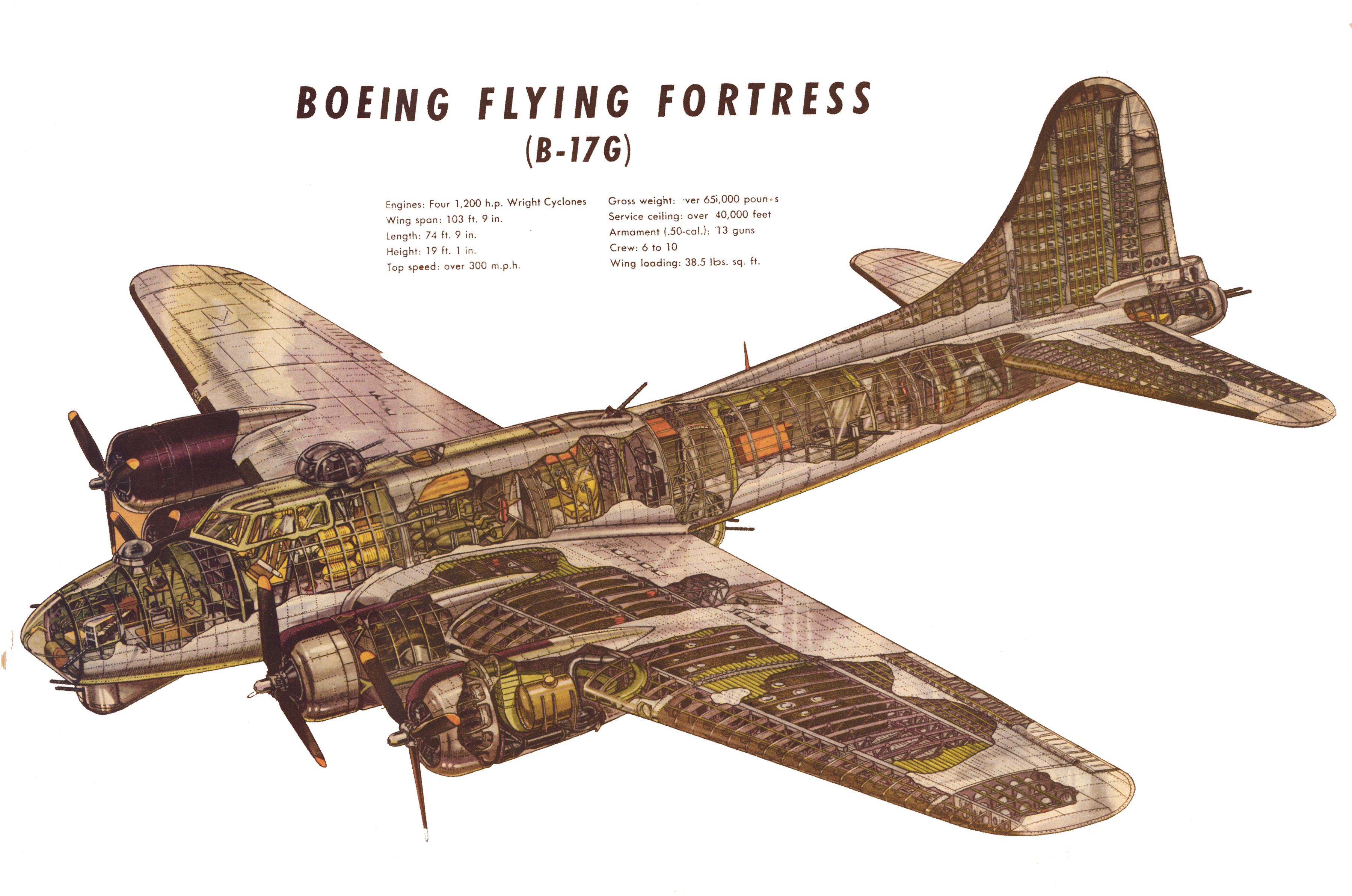
 If we consider the sourcing of civilian produced product solutions “Path A,”
and the research for the sake of research “Path B" we can see how these two
initial efforts set in motion a series of fundamental changes in how the
U.S. military sourced its equipment; changes that are still in effect today.
If we consider the sourcing of civilian produced product solutions “Path A,”
and the research for the sake of research “Path B" we can see how these two
initial efforts set in motion a series of fundamental changes in how the
U.S. military sourced its equipment; changes that are still in effect today. 
 Back then the Signal Corps’ move in partnering with those who ran America’s
industrial complex, in a joint effort to modernize the U.S. military, proved
to be a brilliant decision. It brought to the U.S. military systems from radar
to radio direction finding, targeting systems, radio telephony, teletypes,
telegraphy, improved cryptography as well as forms of automated cryptography, field telephones,
faster and more accurate artillery fire, field combat leaders able to stay in constant
contact with their commanders, bombers able to hit the targets they sought,
air-to-ground communication, improved navigation, and much, much more.
Back then the Signal Corps’ move in partnering with those who ran America’s
industrial complex, in a joint effort to modernize the U.S. military, proved
to be a brilliant decision. It brought to the U.S. military systems from radar
to radio direction finding, targeting systems, radio telephony, teletypes,
telegraphy, improved cryptography as well as forms of automated cryptography, field telephones,
faster and more accurate artillery fire, field combat leaders able to stay in constant
contact with their commanders, bombers able to hit the targets they sought,
air-to-ground communication, improved navigation, and much, much more.