Play our music game. See if you can find the hidden
Army marches on our site. Click the icons you find on each page. Some have music
hidden
behind them, others do not. Good luck!
Music courtesy USAREUR Band
To follow us on Twitter, click here!
Click below to LIKE us!
From Our Home Page Archive
Home page
as originally published in January 2014
— This Month —
Signal Corps Successes
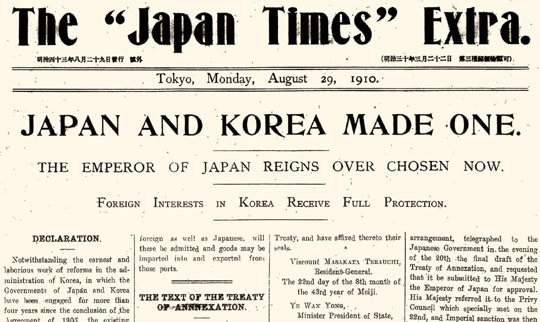
– The Mukden
Cable
And a new 4 part series begins...
Part I — in·tel·li·gence – /in’telijəns/
noun
Signals Intelligence – Gentlemen Do Not
Read Other Gentlemen’s Mail
- - - - -
MISSION STATEMENT
Our Association is a
not-for-profit fraternal organization. It's purpose is a) to foster
camaraderie among the graduates of Signal Corps Officer Candidate
School classes of the World War II, Korean War, and Vietnam War
eras, b) to organize and offer scholarships and other assistance for
the families of Officer and Enlisted OCS cadre who are in need, and
c) to archive for posterity the stories and history of all of the
Signal Corps OCS Officers who served this great country. We are open
to ALL former Army Signal Corps OCS graduates,
their families and
friends, as well as other officers, enlisted men, those interested
in military history, and the general public. Please, come join us. For more information about our
Association, to see a list of our Officers and Directors, or for
contact details, click on the OCS Association link at left.
Please note: The
views and opinions expressed on this website are offered in order to
stimulate interest in those who visit it. They are solely the views
and expressions of the authors and/or contributors to this website
and do not necessarily represent the views of the Army Signal Corps
Officer Candidate School Association, its Officers, Directors,
members, volunteers, staff, or any other party associated with
the Association. If you have any suggestions for improvements to this site,
please send them
to WebMaster@ArmySignalOCS.com. We
are here to serve you.
With this article
we add a new concept to our website – the telling of stories of Signal
Corps Successes. In the history of our branch there have
been many engagements the Signal Corps has been part of,
including engagements where it if were not for the
aggressive efforts of Signaleers the battle would have been
lost. These and other stories about how the Signal Corps
goes about its business make engaging reading, and they are
worth archiving, especially when we know the people
involved. Starting this month we will begin collecting
stories about Signal Corps Successes, and when we have one
ready for publication we'll post it here.
Take a moment
both before and after you read the following story, and
think back and see if you have a story of your own to tell.
The story doesn't have to be about heroism... just about the
Signal Corps and the effort the people in it made to win the
war. If you have a story, please drop us a note. We'll call
you and set up a short telephone interview to ask a few
questions and gather as many details as you remember. Then
we'll fill in the background, write the story, and send it
to you for your final changes and approval. Once you say go,
we'll post it online.
Enjoy what follows - our first Signal
success story...
- - -
Signal Corps Successes
—
The Mukden Cable
Success
at war is made up of three parts: brains, brawn and assets.
One of the Signal Corps’ jobs is to make sure that when it
comes to communications at least, we have the brains to
figure out what assets are needed, the brawn to put them in
place, and the ability to add to the assets as required to
keep the lines of communication open. In the Korean war one
of the assets that needed to be taken care of and kept
operating was the Mukden Cable, a communications link that
stretched from Mukden (known as Shenyang in Chinese) in
China, down the Korean Peninsula and then across the Korean
Strait/Sea of Japan to Japan.
As most know today, the Mukden Cable provided the backbone
needed to link Japan to Korea and China during that time
when Japan occupied both Korea (1910 – 1945) and
northeastern China (then called Manchukuo, or “Manchu
country”). The Mukden Cable was designed to provide the key
communication link between Japan and these fledgling members
of its new empire, so that she could maintain both economic,
military and political control over these newly occupied
territories.
Originally built by the Japanese through slave labor from
both Korea and China, on its opening on September 30, 1939,
it was the longest communication cable in the world,
stretching some 2,700 kilometers along its full length.
Interestingly, it took the Japanese only 4 years to lay the
cable, install the repeater stations, and make the whole
thing operational. To honor their accomplishment the cable
was put into service with a celebration hosted by Japan’s
Minister of Communications, Nagai Ryutaro. Speaking from the
terminus of the cable in Tokyo, he described the
accomplishment as a “revolutionary invention” and went on to
say:
“As the longest cable in the world, completion of the
Japan–Manchukuo connection telephone cable has become the
focus of all the countries. This cable is not an imitation
of the West but was completed with the unique technology on
the basis of the Ministry of Communications’ research and
invention; it is significant as the pride of a scientific
Japan. In today’s world, full of uncertainties, I believe
that as the only leading country of colored people firmly
established in the corner of East Asia, Japan has a cultural
mission that is both real and grave. Considering the great
mission of building the new East Asia that has now fallen on
the shoulders of the Japanese people, we are more acutely
aware of the responsibility of constructing an East Asian
telecommunication network as the first step.”[1]
The reader can see that as far as Japan was concerned, the
Mukden Cable was to play an important part in helping Japan
create its much heralded East Asian Co-prosperity Sphere,
and was destined to support Japan’s efforts to mimic
British, French and German imperialism as it took control of
China and Korea. As Japan so clearly said, it was time that
it, as the leading nation of the “colored people… of East
Asia” got on with making East Asia as powerful as the
countries of the West.
Boy do we have stories
to tell you...
This is how it works
Regular readers of our
website know that we often take on topics that
can’t be adequately covered in one article, and
so post a series of articles on the subject,
over a series of months. We did this in the past
when we wrote a series of three articles that
covered the hottest part of the fighting in
Vietnam, which we called
“The War Begins In
Earnest.” Those articles began in February 2013
and finished in March. In June 2013 we did it
again when we published a three part series that
we called
“U.S. Army Communications - Vietnam“.
In July we offered a series that looked at how
the Signal Corps changed the outcome of WWII and
made America the superpower it is today. That
series we called
“America Between The Wars” and
it ended four months later, in October 2013.
This month in honor of our
clumsy footed friends in the NSA we begin
another series. This one will run in four parts
too. In the last part, to be published in April
2014, we will talk about our NSA buddies and
consider the mistakes they made along the way…
the mistakes that made them the most hated
government agency in the world and the
laughingstock of professional signals
intelligence and communication interception
people everywhere. However, before we start
tossing our weight around on that subject, it’s
probably best if we start at the beginning… by
understanding how the NSA got to where it is
today, and what role our beloved Signal Corps
played in the process. With that intro
then—before we start taking pot shots at the
current rudderless leadership of the NSA and
their inept handling of the worldwide crises
they caused, let’s first learn where this whole
notion of signal intelligence (SIGINT) and communication
interception (COMINT) came from.
On Secrecy...
Now for the good stuff
Much of what
we write on SIGINT and COMINT in this, and the articles that will
follow in the coming months, will seem as new
information to most of our readers. Even many
within our own group of Signal Corps Officers,
men who clearly know more about America’s
intelligence gathering efforts than they will
tell you, will find some of what we disclose
here new. And inevitably, some will question
whether what we are publishing is classified or
not. This will especially be the case when our
last article in this series is published in
April… an article in which we will take the NSA
to task for its sloppy handling of the Edward
Snowden affair.
Not to worry. Everything
you read in this and our subsequent articles has
been declassified. For those of you who doubt
us, we admit that the majority of what you will
read here was once highly classified, and much
is still not generally available to the public.
Even so, we assure you, what appears in these
articles is no longer classified.
As to how it came to be
that way, in the 1970s the government began a
series of initiatives, under the auspices of the
National Security Agency, to clean up the tons
of classified documents our government and
military maintained. The objective was to
declassify those whose release would no longer
pose a threat to national security. That was
nice. However, what the public was not told was
that among the heaps of documents that were
being declassified a few special ones were being
stamped “declassified” but were being spirited
away and put into a special section of the
National Archives and Records Administration.
And there they sat; declassified but essentially
out of sight.
Most were what were called
“Special Research Histories.” Written by people
from within the group whose history they told,
they were originally intended for internal use
to both archive the agency’s history and to help
new members grasp the honor and tradition of the
group they were joining. Because of the story
they told, these Special Research Histories were
highly classified and kept from public eyes.
Until, that is, someone in the NSA realized that
by publishing their own history they could
reinforce in Congress’ eyes the importance of
the work the NSA was doing, and possibly avoid
the budget cuts Congress was threatening back in
the 70s and 80s. From that moment to where we are
today it was just a short skip and a hop to the
point where every clandestine arm of the
government and military had its own Special
Research History declassified and made available
to Joe America, either to boost its own PR
image, or to reinforce its need for more money.
It’s a strange thing, the ego that infests our
government’s agencies. It’s all Rah! Rah! for the
work we are doing, and 'keep your nose out of our
business,' until it’s time to cuddle up to
Congress for more shekels. Then it’s national
security be damned, we need more money.
At any rate, the 70s and 80s
have come and passed and today all manner of
government information has been declassified,
weather to boost an agency’s ego, to help them
capture more money, or for some other reason. Not
surprisingly, the Special Research Histories we
talk of are in that group. Today they
represent only a small fraction of the material
that is now in the public domain, but even so,
they represent some of the best stuff there is
to read… and it is from this treasure trove that
we have gathered much of what you will read
here.
Our interest in this
series of articles is on that portion that deals
with signals intelligence and communication
interception and the impact the need for these
capabilities had on the evolution of U.S. Army
Signal Corps military signal gathering
efforts—from the formation of the very first
U.S. Army Signals Intelligence Section to
today’s NSA.
This page last updated
2 January 2014. New content is constantly being added.
Please check back frequently.
Update
2 January 2014 –
We've uploaded the class pictures Candidate Bob
Warner sent us for his
OCS Class 52-21.
You can find them on his class page. Just click on
the old, tired, torn (sounds like us, right?) photo
album at the bottom of the page, and enjoy. Bob's
still working on identifying the
people in the pics. When he sends that along, we'll
update the album and post a new note here. Thanks Bob!
Posted
1 January 2014 –A couple of new
documents and an update on his continuing story of
fixing the military communications network along the
German railroad, post- WWII, were sent in by
Gerry Katz (OCS Class 44-40). Click
Gerry's underlined name
here to get to his bio page, and scroll down to the
bottom to see the newly posted info.
Posted
1 November 2013 –
A Long lost Candidate Stephen P. Curley has finally
checked in after 40+ years.
A member of Class 16-66, you can check on him and his classmates on their
Class Page. Click on Steve's last name to read his short update. Click
HERE
to reach the Class Page for OCS Class 16-66.
Got some information about yourself that you want to pass on to your
classmates? Have an update for your bio? Send it to us and we'll update your
status on your class page.
Continued from left column...
In trying to gather
information on this topic we have had to dig
long and deep, because as of the moment, while
all of the material we talk of here is available
to the public, only two correlated portions of
the information that is out there has been
published in any readable form. Back in 1977,
the Department of Defense released a multivolume
compilation entitled The "Magic" Background of
Pearl Harbor; more recently, Dr. Ronald Spector
edited and released a publication he titled
Listening to the Enemy: Key Documents on the
role of Communications Intelligence in the War
with Japan. Other than these two, the rest
of the historical glory of what is contained within the
Special Research Histories housed in the special section of
the National Archives and Records Administration still
remains essentially hidden from the public… waiting to be
mined by historians like us… which as you will see in the
story that follows, we did.
So let us begin... here is Part I of our four part series:
- - - -
- click icon above to play video -
WITH LITTLE DOUBT, the story of
signal intelligence came of age in World War II. However, it
did not begin there. Instead it began in June of 1916, when
from then until May of 1918 various attempts at cryptanalysis
were conducted by a civilian who undertook the effort for
purely patriotic reasons. At his own expense, a Mr. George Fabyan organized a small group of highly skilled
cryptanalysts to work at his Riverbank Laboratories, in
Geneva, Illinois, on the task of trying as best they could
to break the codes and ciphers forwarded to them by the War,
Navy, State, and Justice Departments.
Their efforts were laudable, and they
succeeded. So well that sometime around June 1917 the War
Department took notice of the importance of what they were
doing and decided that this work should be more formally
brought under its own jurisdiction. On the surface, this
idea seemed fine… except for two problems. First, while the
War Department wanted to control the work, the only agency
benefitting from it was the State Department, whose cipher
messages were being forwarded to the group for analysis from
State Department offices around the world; and second, the
War Department had no funds to cover the cost of the
exercise.
Being the good brothers that they
were in those days, the two colluded such that the War
Department took on the responsibility for the work to be
done while State provided the funds. To assure that
discipline and secrecy was maintained the War Department
assigned a Colonel Van Deman as G-2 for the operation,
placing him in the unique position of reporting both
directly to the War Department as well as to the Signal
Corps (Chief of Signals). This in effect made this group of
cryptanalysis a branch of the Signal Corps, without giving
the Signal Corps direct responsibility for its supervision.
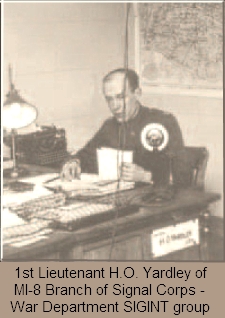
At the same time that Van Deman was
appointed, the War Department commissioned Herbert O. Yardley
as a 1st Lieutenant, and put him in charge of operations. A
civilian with no military training, Yardley was thought to
fit the bill as he had been a telegrapher at the State
Department, the group that spurred the creation of the unit
in the first place. That, plus his keen interest in
cryptography, and two civilians to support him, comprised
America’s first ever effort to initiate cryptographic signals
intelligence.
By late 1917 the amount of work
requests flowing from the State Department to this group
overwhelmed the group. To make sure that no signal
information fell through the cracks the War Department
increased the group’s staff while at the same time it
reorganized it as a “section.” It’s name? The much vaulted
MI-8, a legendary name today, if only in Hollywood.
Subdivided into 6 subsections the
duties it took on included:
(1) A subsection that focused on code
and cipher solutions. Today we would call this work crypto
analysis or cryptanalysis.
(2) A subsection that handled code and
cipher compilation. Interestingly, at this point the
semi-involvement of the Signal Corps in MI-8 began to show
itself, as under Army regulations of the time the
compilation and revision of codes was a function of the
Chief Signal Officer. It appears that when the Chief Signal
Officer became aware that the Germans possessed copies of
the War Department’s Telegraph Code, he felt it better to
move this function out of the Signal Corps proper and into
MI-8, rather than continue to risk code compromise from
within the Signal Corps itself. There in MI-8 the group that
ran the code and cipher compilation subsection began working
on producing several replacement codes for the ones that had
been compromised. Among these were the very early codes
known as Military Intelligence Codes No. 5 and 9, as well as
a series of small pocket codes to be used by the American
secret agents that were roaming the world at the time.
(3) A training
subsection was established, not only to train MI-8 personnel
but also to train most of the personnel being sent overseas
to handle field force cryptanalytic duties, including those
stationed with the U.S. Army in its Allied Expeditionary
Force group, as well as those U.S. military personnel
supporting White Russian military efforts in Siberia of all
places.[2]
(4) A secret inks subsection was set up
to create invisible inks for use by secret agents. This
group also examined letters for secret ink writing. Not
simply a ‘nice to have,’ the work this group did was
absolutely essential in those days. At times over 2,000
letters were examined and decoded each week.
(5) A shorthand subsection was also
added, with the people in this group doing decipher work on
texts produced in various shorthand systems, such as the
ones used in Germany.
(6) A communications subsection was
established to handle messages to and from military attaches
and intelligence officers around the world. As in the secret
inks subsection, traffic here too was voluminous, with over
33,000 messages typically being processed every 12 months …
nearly all of which were in code and had to be decoded by
hand.
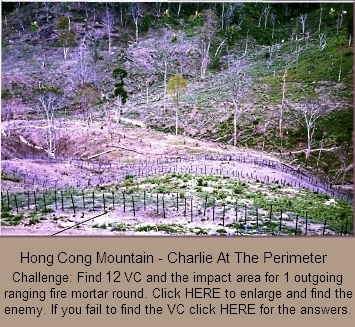
Is that fear creeping again through the wire? I look out at
the perimeter and see again the phantoms that come with the
failing light, the infinitesimally small movements of
minuscule shadows… shadows that I’m suddenly sure are
Charlie taking his place along the perimeter. Or are those
movements merely bushes, quietly rustling as the day’s heat
gives way to the sticky sweatiness that comes with twilight
in the jungle. Is that Charlie looking back at me? Is that
him? Or is it just my own fear that I see?
No, it can’t be him. It’s too soon. He’s there, but he won’t
be taking a position on the wire until maybe 0300. If I see
the movements then, then I know it will be him. Now though…
this time… it’s just fear taking hold.
It’s a funny thing, this fear thing. I’ll tell you a secret
about it, something I learned from having met it so many
times: fear is an absolutist. When it comes it comes
completely. It never comes by measures. It either comes or
it doesn’t. And when it does, it’s there in full force; all
or nothing. It takes control of every pore of your body… of
your very being… leaving your brain in charge of a corpse, a
cadaver, a set of remains that while the heart still beats
it cannot find one cell within that will respond to its
command. Yet strangely, stiff though you are, every
scintilla of your creature is shaking. Fear overwhelms you
and bullies you like a tyrant, ruling your presence with the
same crushing omnipotence that, as a child, you were told
only God had the power to exercise.
And it stays with you until you conquer it.
But how to conquer fear?
Listen and I will tell you, for I have seen Charlie come
through the wire many times, and with every coming fear has
preceded his arrival.
Fear cannot be conquered with courage. I have tried courage
and it does not work. Forget what they told you in training.
Courage is a weak six if you are looking for protection from
fear. Instead you need to look to the limits of your life…
the limits fear puts on it when it forces you to play its
game… when it muscles its way into your mind so tightly that
it and it alone determines when you can resume living.
Because it’s at this exact point—the point when fear has its
most control—that fear is at its weakest; for when it
controls your ability to resume your life you can—at that
moment—take back control of that same life. So pay no
attention to fear. Instead, watch for the frustration.
What frustration you ask? The frustration you will begin to
feel when you suddenly realize that something is stopping
you from getting on with our life, and it’s about time that
that something get out of the way and let you get on with
life again.
Watch for the frustration, and be prepared… because if your
feelings are true then at that very moment the fear you feel
will disappear. Like a puff of smoke, it will be gone. Like
a child’s soap bubble that bursts in the air, faster than
your eyes can blink or your heart can beat, it will be gone
and leave no trace of its past. It’s as simple as that.
The next time you see Charlie coming through the wire know
that those who have beaten the fear you feel understand
something you have not yet learned. That with or without
fear you must live until you die, and the worst part about
having a life still to live… even if it’s for only a few
seconds more until that bullet that was just fired hits you… is not being able to get on with it. When you
become frustrated and angry that fear is stopping you from
getting on with your life, your fear will end.
e f
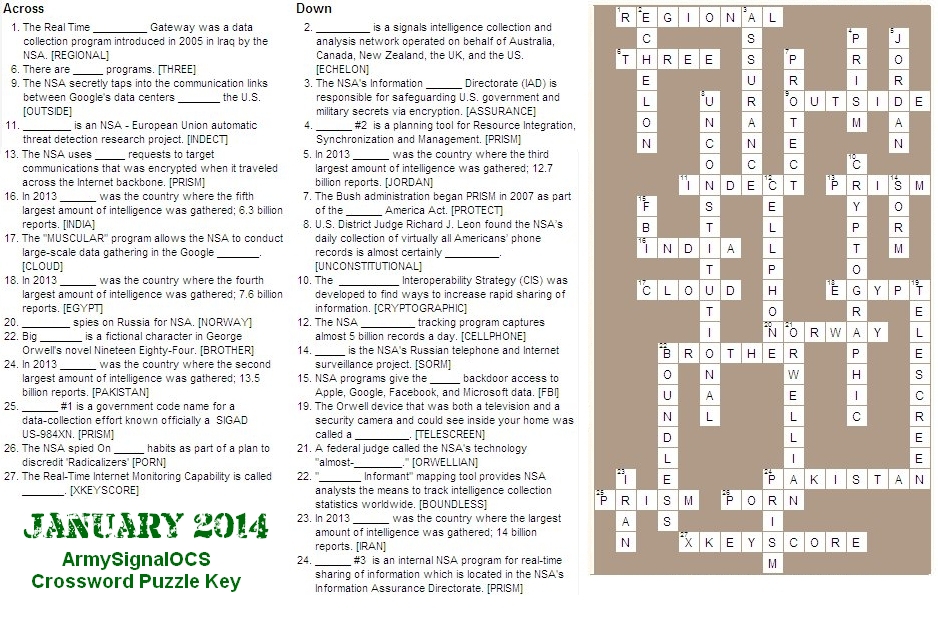
January's Crossword Puzzle
Theme:
NSA Secrets
Hint:
Join 2 and 3 word answers together as one complete word.
For answer key to this month's
puzzle,
see icon at bottom of page
Footnotes:
[1]
Japanese publication: Nichi-Man renraku denwa koji
shunkosu; TKZ 375, November 1939, pages 120-126.To return to your place in the
text click here:
[2]From August
1918 to July 1920 the U.S. Army as well as the Entente
powers and Japan sent troops to Russia in what was called
the Siberian Intervention or the Siberian Expedition (in
Japanese (シベリア出兵 Shiberia Shuppei). Their task was to
support
White
Russian forces against the Bolshevik Red Army during
the Russian
Civil War. To return to your place in the
text click here:
Search Instructions:
To perform a
quick search for a VIETNAM, KOREA or WWII era class (such
as: 7-66),
a graduate (such as: Green), or a similar search, follow
this example:
A search, for example, for Richard
Green, will result in all the "Richard" entries,
all the "Green" entries, and all the "Richard Green"
entries.
Original Site Design and Construction
By John Hart, Class 07-66. Ongoing site design and
maintenance courtesy Class 09-67.
Content and design Copyright 1998 -
2014,
ArmySignalOCS.com
This site is updated as we
receive new material. Please check back frequently. For your
security, please read our Website Privacy & Use Policy by
clickinghere.









 Regular readers of our
website know that we often take on topics that
can’t be adequately covered in one article, and
so post a series of articles on the subject,
over a series of months. We did this in the past
when we wrote a series of three articles that
covered the hottest part of the fighting in
Vietnam, which we called
Regular readers of our
website know that we often take on topics that
can’t be adequately covered in one article, and
so post a series of articles on the subject,
over a series of months. We did this in the past
when we wrote a series of three articles that
covered the hottest part of the fighting in
Vietnam, which we called
 Not to worry. Everything
you read in this and our subsequent articles has
been declassified. For those of you who doubt
us, we admit that the majority of what you will
read here was once highly classified, and much
is still not generally available to the public.
Even so, we assure you, what appears in these
articles is no longer classified.
Not to worry. Everything
you read in this and our subsequent articles has
been declassified. For those of you who doubt
us, we admit that the majority of what you will
read here was once highly classified, and much
is still not generally available to the public.
Even so, we assure you, what appears in these
articles is no longer classified. 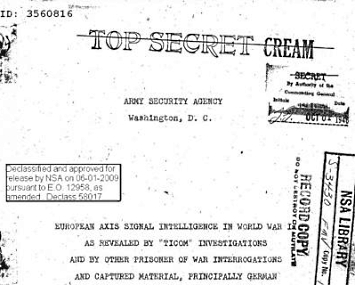



 Being the good brothers that they
were in those days, the two colluded such that the War
Department took on the responsibility for the work to be
done while State provided the funds. To assure that
discipline and secrecy was maintained the War Department
assigned a Colonel Van Deman as G-2 for the operation,
placing him in the unique position of reporting both
directly to the War Department as well as to the Signal
Corps (Chief of Signals). This in effect made this group of
cryptanalysis a branch of the Signal Corps, without giving
the Signal Corps direct responsibility for its supervision.
Being the good brothers that they
were in those days, the two colluded such that the War
Department took on the responsibility for the work to be
done while State provided the funds. To assure that
discipline and secrecy was maintained the War Department
assigned a Colonel Van Deman as G-2 for the operation,
placing him in the unique position of reporting both
directly to the War Department as well as to the Signal
Corps (Chief of Signals). This in effect made this group of
cryptanalysis a branch of the Signal Corps, without giving
the Signal Corps direct responsibility for its supervision.